
#folistim Archives - FertiGlobal

February 10, 2026
Focus on pulses

Feeling the pulse in Argentina

This time our blog takes us to Argentina.

What crops would you associate with Argentina? Maize? Soybeans? Wheat?

Well, you’d be right about those. Together with sunflowers, these four crops account for more than 90% of the country’s total crop area. So it’s a reflection of the size of Argentina’s cropland – 35 million hectares, to be precise – that from that remaining 10 per cent, Argentina can also stake a claim to being one of the world’s leading producers and exporters of pulses.

In fact, Argentina enjoys the number five spot in the pulse production global rankings. With Argentinians themselves apparently indifferent about the pulse – annual domestic consumption is just 800g per capita – the country’s pulse growers focus their efforts on beans, peas and chickpeas for export to the Middle East, Latin America and the Mediterranean.

And while there’s evident diversity in Argentina’s pulse cropping, it’s the green pea that stands out as the obvious ‘hero’. Farmers have taken advantage of the country’s ideal growing conditions for peas: fertile soils, a favourable climate and (over the last season, at least) optimum rainfall to ensure a healthy, heavy crop. Added to that, its southern hemisphere location provides an ideal opportunity for counter-seasonal production.

In fact, according to an early-January prediction from the Global Pulse Confederation, Argentina is on track to deliver its largest-ever green pea crop this season, estimated at some 264,000 tonnes. That’s 108% above the five-year average and a massive 48% year-on-year increase.

It’s not just about meeting market demand, however. The green pea is a winter-spring crop for Argentinian farmers, easy-to-grow and profitable, that allows them to take a later crop of soybeans from the same field.

Unsurprisingly, Argentina’s pea growers also recognise the vital role that the green pea – as a legume – plays in sustainable agriculture. It’s these same attributes – improving soil biodiversity and health, easing crop rotations, improving chemical fertiliser use efficiency – that were recognised and highlighted by the UN’s World Pulse Day initiative, alongside its equally important role in global nutrition, food security, dietary diversity and efficiency.

FertiGlobal trials

It doesn’t take much to connect the dots. FertiGlobal’s own interests in sustainable agriculture, nutrient use efficiency, soil health and biodiversity clearly align well with the objectives of World Pulse Day, while our presence in Argentina is unsurprisingly focused on helping farmers ‘get more from less’ when it comes to their most important and most profitable crops.

Readers familiar with our blogs will recall how FertiGlobal’s head of technical development for the LATAM region, Josefina Mackern, enjoys nothing more than having ‘boots on the ground’ when it comes to technical development and application.

Enter our green pea trials in Argentina, conducted during the 2024 season. Josefina worked with FertiGlobal partner Synergy Agro to investigate how two of our technology platforms – Folistim and ACES – could improve yield and productivity in the green pea crop.

ACES

Our ACES Technology – Advanced Crop Eco Shield – combines natural nutrients that our R&D programme has proven to have beneficial effects on vital plant defence systems.

Galle, the product chosen for this trial, is a seed treatment designed to be applied in conjunction with, and to support, the inoculants commonly used in legume cultivation. Seed treatment allows these bioactive compounds to initiate these defence systems at an early stage in crop development, helping to ‘future proof’ each plant against subsequent pathogenic attack.

Five treatments (as table 1) and five replicates were employed, totalling 30 plots at the trial site in Heavy, Buenos Aires province.

Table 1

Observations were made of vegetative growth (plant survival and establishment, fresh shoot and root weight) and at harvest (hectolitre weight, thousand-kernel weight, and grain yield).

As Chart 1 reveals, the application to green peas of biostimulants as seed treatments is important for crop establishment and growth: Galle resulted in approximately 7% higher initial growth.

Chart 1: Plant establishment

Several differences were observed in yield, consistent with the early growth observations. While treatment with the competitor 2 (Trichoderma) achieved the highest yield, Galle at 200ml per 100kg of pea seed was only marginally behind – representing a suitable biostimulant option when used in conjunction with inoculants.

Chart 2: Yield


Folistim

As with ACES, Folistim Technologies are formulated around natural compounds, in this case complexed with essential plant nutrients. The range is designed to biostimulate crops into optimising their use of nutrient elements so that they first prioritise vegetative growth and then support fruit quality and conservation.

In a second trial, the focus was on Rumis, a Folistim product that’s specifically formulated to favour development of roots and shoots. Its auxin-like effects promote earlier vegetative growth, especially in seedlings.

Also conducted in Heavy, this trial featured seven treatments made at two timings – first at flowering, then a second at pod formation.

Table 2

Assessments were made of vegetative growth (fresh shoot weight) and at harvest (pod length and grain yield). As Table 3 reveals, Rumis-treated plants displayed the heaviest fresh shoot weights.

Table 3: Fresh shoot weight

*Evaluation 20 days after the first application

When it came to yield, no major differences were observed in pod length but there was an apparent trend towards increased pod length when biostimulants were applied during pod formation.

As for yield (Chart 3), Rumis achieved the highest yield when it was applied at pod development (R4).

Chart 3: Yield

Although only an exploratory study, this trial nevertheless demonstrated the value of a biostimulant such as Rumis. Applied foliarly at 1l/ha, at full flowering and during pod development, it represents a highly suitable biostimulant to improve the green pea crop yield.

Conclusion

Argentina’s green pea cropped area is increasing rapidly. It’s not just because the end of the drought has restored fields to their optimum pulse-growing capacity, but also because in peas (and in pulses more generally) Argentina’s farmers have found a crop that can replace wheat in regions where it has lost profitability due to political, economic, and climatic conditions.

New crops demand new understandings and new techniques. We’re delighted to support Argentina’s growers in their adoption of crops like green peas.

January 15, 2026
The FertiGlobal concept

It’s crop protection. Just different.

Will you farm differently in 2026? FertiGlobal’s set on providing farmers with the tools they need to successfully adopt a new approach to crop protection.

When you think of crop protection, you probably think of agrochemicals, right? That’s the traditional approach to crop protection: inputs which, when applied to the crop, build up a chemical shield to defend against attack from diseases and pests.

It’s a tried-and-tested method. And it allows farmers to produce reliable quantities of food at affordable prices. But could we do better?

Stress

Here’s the thing: amongst the world’s staple crops, we lose on average about 70% of crop productivity due to stress, whether abiotic or biotic. Most crops never reach even 20% of their true potential.

Yet because it’s not always obvious when a crop is stressed, many farmers don’t realise the scale of the problem. Thus hidden stress translates into hidden loss.

Rethinking crop protection

We reframed the problem and redefined the category: crop protection should be about supporting plants to cope with stress. We would develop products that could empower plants to defend themselves, through their own defence and resistance systems, without the reliance on pesticides.

Our approach to crop protection encompasses three elements:

  • Nutrition, to provide energy
  • Bioactivation, to prime and prepare the plant to cope adequately in a stress situation
  • Biostimulation, to help the plant mobilise its anti-stress mechanism

It’s all about the nutrition

We believe in a crop protection that’s built on a sound understanding of crop nutrition. Intensive crop nutrition gives crops the best protection – against pests, against disease, against the stress arising from extremes of weather – to in turn ensure productive, high-yielding, high-quality output.

Wrap this all up in a long-term, holistic methodology and you have the Crop Management Vision that underpins our entire strategy.

Built on Technology

Bioactivation is the innovative heart of our programme. First introduced through our EnNuVi platform – an acronym of Enhance, Nurture, Vitalize – this combination of active polyphenols and selected natural ingredients is protected by patent and scientifically validated in ongoing trials and assessments.

Its primary effect we term the ‘stay-green’ effect. By keeping the plant green, we maximise photosynthesis and thus available energy. Not only does this ‘turbocharge’ the plant’s natural defence system, it also directly increases yield. Meanwhile, secondary effects include reduced pesticide volumes and decreased water consumption, thanks to the plant’s ability to better manage periods of stress.

Crop Management Programs (CMP)

Think of EnNuVi as the ‘engine’ for the rest of the CMP, towing a train comprising products drawn from our other technologies:

  • Foliflo and Folimac for the all-important delivery of nutrition
  • Folistim to provide the biostimulation that draws everything together.

Our team, both those in headquarters in Italy and in-country, use products drawn from each of our flagship technologies to compile specific, tailored CMPs for each crop. For example, a crop needing vegetative yield (lettuce, for example) will have a different nutritional and biostimulant requirement from that producing reproductive yield (fruit).

Every CMP is designed to help the plant manage stress more efficiently, allowing farmers to deliver the high-yielding, high-quality output from whatever crop they’re growing: cereals, vegetables, root crops, or fruit.

It’s a programme that puts equal focus on the environment as well as farmers’ investment in their crop. Taken together, that’s how we deliver a truly sustainable form of agriculture that’s fit for the challenges of the 21st century.

Throughout this year, we’ll regularly look more closely at how our different technologies perform in the field, with stories drawn from our team’s work around the world.

In the meantime, if you’d like to find out more about how Crop Management Programs could work on your farm or with your customers, do get in touch with one of our FertiGlobal Area Managers.

We’ll help you farm differently.

April 23, 2025
Chilli focus

The Heat Is On – for EnNuVi and FOLISTIM

Do you embrace the chilli pepper, luxuriating in the heat it brings to your favourite dishes, and swapping anecdotes about the Carolina Reaper and Pepper X? Or would you rather enjoy the mild kick of the Serrano, steering clear of anything with a heftier punch?

If you’re of the former persuasion, then it’s likely you’ll also seek out the delights of dried chillis, whether whole or as chilli powder. And there’s a strong likelihood that your favourite spice was grown by one of India’s 100 million farmers.

Yes, we’re back in India again. It’s a country in which FertiGlobal has great interest, as regular blog readers will know from previous writings about ginger, apples, and cardamom.

India isn’t shy with its agricultural production, ranking at or near the top across a range of common crops. So perhaps it’s no surprise, given the country’s culinary reputation, to discover that India is the world’s biggest producer of dried chillis and peppers, accounting for about 40% of global production. Not just a producer, either: it’s also the biggest consumer and exporter.

Most of that production is concentrated in the state of Andhra Pradesh, on the country’s east coast. According to official data, chilli cultivation here utilises nearly 200,000 hectares, producing around 1.12m tonnes annually. It’s to that state we headed, with our branch in India SCL Commercial, to explore the potential of the FertiGlobal products Mantus and Semia to help reduce incidence of the most common diseases afflicting the region’s chilli crops.

A transition to Total Crop Management

As India’s farmers commercialise and move beyond their traditional ‘homestead’ farming systems, FertiGlobal believes there’s a strong case for introducing them to new, more productive practices – including the fundamental FertiGlobal principle of Total Crop Management.

Through Total Crop Management, we think about every crop throughout its lifecycle: what it needs, and what will make it thrive, at every stage of growth. So, as appropriate in each crop, that’s from germination to emergence to flowering to ripening to harvest, and so on.

Total Crop Management is primarily about crop nutrition. A plant that has its nutritional requirements fully satisfied will be better placed to stimulate and enact its own natural defence processes.

With Total Crop Management, you get a healthy plant that stays healthy – because it’s well-placed to defend itself against the invading pathogens that cause disease, depress yields and lower quality.

FertiGlobal Technologies

Our Total Crop Management approach is espoused by our Technologies – the families of products that our R&D team has formulated to provide farmers with sustainable solutions.

Each Technology combines plant nutrients, biostimulants and bioactivators to deliver specific benefits through particular mechanisms and modes of action within the plant.

For our chilli trials in India, we focused on our EnNuVi Technology, a patented technology that comprises high analysis formulations with nutrient polyphenolic molecules (NPM). NPMs play a prime role in activating the plant’s natural defences, by helping to manage the right balance between the production of Reactive Oxygen Species (ROS). ROS are a natural by-product of photosynthesis, but can be damaging if levels become too high.

All EnNuVi Technology products work to ENhance the plant’s performance against stress, by NUrturing with NPMs and VItalising the crop for stronger, healthier growth.

Such is the innovation encapsulated within EnNuVi that it has been recognised within the European Union’s LIFE programme for its objective of reducing the environmental impact of agricultural practices, without compromising the need for food and ever-higher yields.

EnNuVi in chillis

The village of Lingala, a farming community in the Krishna District of Andhra Pradesh, was the backdrop for our trials. Here, we sought to evaluate the performance of two EnNuVi products – MANTUS and SEMIA – on controlling anthracnose, dieback, powdery mildew and wilt diseases.

Nine farms within Lingala were involved in the trials. In all cases, the FertiGlobal products were compared against treatments made using standard farmer practices (SP).

Visually, plants treated with the EnNuVi Technology-based products were more upright and greener. In particular, farmers commented on the added ‘shine’ that the products seemed to impart to the fruits: this was unusually noticeable, and something they attributed to the improved health status of the crop.

Of course, we’re never happy with subjectivity alone. Yet the farmers’ optimism about their healthier crops wasn’t misplaced: what we saw, amongst all the treatment protocols for MANTUS and SEMIA, was not only an increased number of fruits per plant, but also the lowest number of diseased fruits per plant.

By adding both MANTUS and SEMIA to their treatments – which, in this part of India are commonly made by knapsack sprayers – farmers saw positive returns on investment over SP. Both products showed positive, consistent performance – convincing the Lingala farmers that EnNuVi Technology would be worthwhile.

FOLISTIM in chillis

Like EnNuVi, FOLISTIM is a FertiGlobal Technology designed to fulfil our ambition of Total Crop Management. It’s been developed with a specific goal in mind: promoting a vegetative reset in the crop, after periods of stress. Again, its focus is on good nutrition, by optimising plant nutrients to enhance final fruit quality and maximise its storage potential. FOLISTIM not only relieves abiotic stress but can improve resistance to it too.

With FOLISTIM, we went to the west coast state of Maharashtra. If Andhra Pradesh is known as India’s Chilli Bowl for its high production, then Maharashtra is the Chilli Paradise, producing some of India’s most sought-after chilli varieties such as the Dhani, Jwala, and the famed Bhiwapur.

Here, we looked at the effects of CREO on yield and commercial quality. Formulated around phosphorus, potassium and boron, it’s designed to support crops in their ripening. Of course, there are several factors involved in optimising ripening, so this became quite an extensive trial, measuring a variety of metrics such as flowers per plant and the numbers dropped, fruits per plant and the numbers dropped, plus plant height and eventual fruit yield.

Across every metric, CREO-treated plants performed significantly better than those plants receiving SP. Unsurprisingly, therefore, final yields showed significant increases: up to 20% over SP, with the increase delivering a net revenue benefit of nearly USD100 per ha.

Sample of the chili harvest and its weight (g) per plant according to the different treatments

That’s a return on investment of 2.68 – which just goes to show how a Total Crop Management approach not only benefits the plant and the planet, but profitability of the grower too.

For fuller details of these commercial trials in India, do get in touch: we’d say they’re hot!

Cardamom in India FertiGlobal
December 20, 2024
News from India

The Queen of Spices

Only vanilla and saffron are more expensive; only cinnamon and black pepper might have a claim to being the oldest spice. But only one spice boasts of being the Queen of Spices, and that’s cardamom.

Recognised for its exceptional taste, flavour and aroma for more than 4,000 years, cardamom rightly takes its crown for its incomparable culinary versatility. The spice is a veritable gem across sweet as well as savoury dishes, its influence spreading to cuisines well beyond its native habitat in India: it’s been popular in Scandinavia ever since the Vikings took it home from Constantinople (modern-day Istanbul) more than 1,000 years ago, enthusiastically adding it to everything from biscuits and breads to pastries and sausages. Could there be any greater contrast between the humid Indian tropics and a region that stretches into the Arctic Circle?

Only one plant is the true cardamom, Elletaria cardamomum. It’s a member of the Zingiberaceae family – otherwise known as the ginger family – and is in illustrious company: many of the family’s species are recognised as ornamentals, medicinals, or spices, while many also yield the essential oils so prized by the perfume industry. Another member of the ginger family, Amomum, is known as the large cardamom: it’s the source of the black (or brown) pods.

We’ve talked before about ginger, specifically its Indian cultivation and also about FertiGlobal’s specific interests in India. We’re very keen on the ‘boots on the ground’ philosophy: only by talking to farmers, ‘unfiltered’, can we really get a measure for the crop production challenges they face.

And so it was that just a few months ago, we paid another visit to India, this time to the hills of Southern India and specifically the Western Ghats, where cardamom still grows wild. Despite its origins in India, today the country vies with Guatemala for the title of top global producer, and joins other countries such as Indonesia, China and Vietnam to turn out nearly 140,000 tonnes of cardamom annually.

For a crop that’s so highly revered, sought-after and expensive, one might expect its cultivation to be second-to-none. Yet its preference for elevations higher than 600m and shaded forest soils tends to ensure that production remains limited to small plots of land and in the hands of smallholders.

Added to that is its labour-intensive nature. Not only is much of the initial preparation – clearing weeds and sowing seed – carried out by hand, but it may take up to three years before it yields merely a light crop, all the while requiring weeding and transplantations to maintain a healthy stand. Needless to say, even when the crop comes into full production – plantations generally last around 10 years – the crop is gathered, dried and processed by hand.

FertiGlobal, of course, could be described as ‘production practice agnostic’: our attention is not on how many hectares a farmer has, or whether he or she is using the latest technology. Our only focus is on the crop. Total Crop Management. That’s because when it comes to their production practices, a small-scale farmer faces just the same challenges on crop nutrition, crop health and crop stress as his well-hectared counterpart.

What’s more, with a crop like cardamom where the profitable, yield-producing period accounts for only part of a much longer crop lifecycle, it’s even more important that we can help farmers get their crops off to a good start. In any crop, realising its full yield potential requires a good start every time.

In a hot and humid climate like India’s, crops can be particularly susceptible to fungal disease. But many farmers are still encouraged to use chemicals like mancozeb, which is now banned in many of the countries to which the crop is exported. That’s why FertiGlobal’s team is working closely with our Indian branch, SCL Commercial India, to examine the potential of our bioactive technologies like EnNuVi and FOLISTIM, for example.

Both technologies support plant defence systems, preventing many diseases from taking hold in the first place, and helping farmers avoid coming under pressure to use a harsh chemical to cure an outbreak.

We’re looking forward to seeing more results from our work in India. It’s another country where the FertiGlobal difference is bringing real benefit – not just to farmers, but consumers and the environment too.

August 9, 2022
New product

Fortitudo – the innovative product powered by Folistim Technology

Transplant is a crucial stage for a plant, often stressful.

“Moving” to a new soil is stressing and always requires a period of adaptation. Frequently, this is also accompanied by a change in climatic conditions, such as temperature, light and humidity.

Fortitudo, one of our latest solutions powered by Folistim Technology, is a reliable ally during this delicate period. Its formulation promotes cell division and root elongation, ensuring protection and fortification for seedling weakened by transplanting.

A balanced macronutrient supply is always the key to assure full recovery of normal plant growth.

Take a look at the guide clicking the link here below to discover more!

Fortitudo an innovation under Folistim Technology

Folistim Technology fertilizers by FertiGlobal
July 28, 2022
Technology

Folistim for a fine-tuning crop management

Can you imagine a naturally derived, stable, and easy-to-use solution that provides crops with all the support and nutrients they need?

Folistim-based products are what you are looking for!

This FertiGlobal Technology promotes vegetative growth and stress tolerance by ensuring seedling an effective supply of nutrients. And that’s not all: the application of solutions powered by Folistim has also positive effects on soil regeneration and crop cycle regulation.

What’s the secret behind its formulation? A wise combination of nutrients with natural fine-tuning compounds, developed, tested and improved by our multifunctional team of researchers.

All the products of the assortment are optimal both for foliar application and irrigation, thanks to their liquid texture, which is mixable with other agrochemical compounds.

click here to know how Folistim Technology works

June 27, 2022
New product

Creo by Folistim Technology

Breaking news for sustainable #growers!

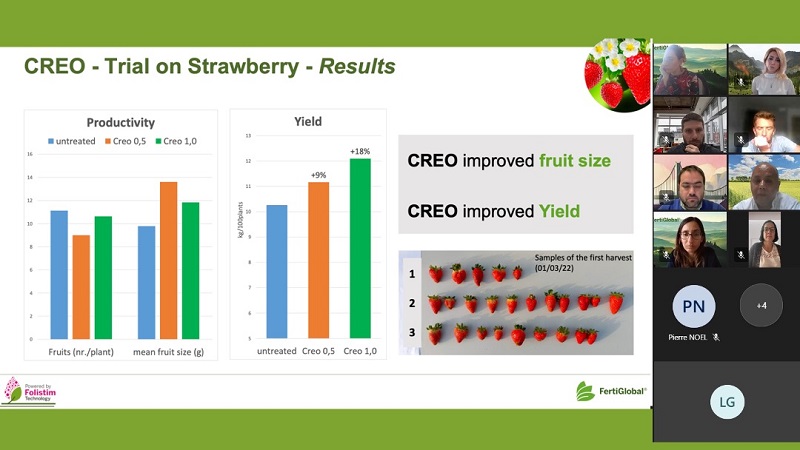
This month we are launching CREO, a brand new solution powered by Folistim Technology.

For the occasion, our experts attended a dedicated training to learn deeply all the breakthrough features of the product.

Creo is a fruit ripening promoter with outstanding nutritive and biostimulating properties. It’s easy to apply through foliar spray.

Thanks to a rich composition including macronutrient, amino acids, vitamins and other essential bioregulators, CREO helps plants to accumulate biomass, sugars and pigments in their fruits.

By supplying plants with key elements and natural precursors ready for biochemical processes, CREO is able to:

📈Improve fruit quality and yield

🍓Anticipate and uniform harvests

💪Support plant metabolism in stress conditions


January 13, 2022
New solution

Folistim Fortitudo

A new cutting-edge technology is now part of FertiGlobal’s rich line up, ready to help farmers worldwide growing strong and healthy crops in the most sustainable way!

We are happy to present you Fortitudo, based on our Folistim technology.

Transplanting is a traumatic event for plants: roots have to adapt to the new characteristics of the soil such as different temperature, water and air availability. In this delicate phase, growth can come to a standstill and the plant may weaken and even die.

That’s where Fortitudo comes in!

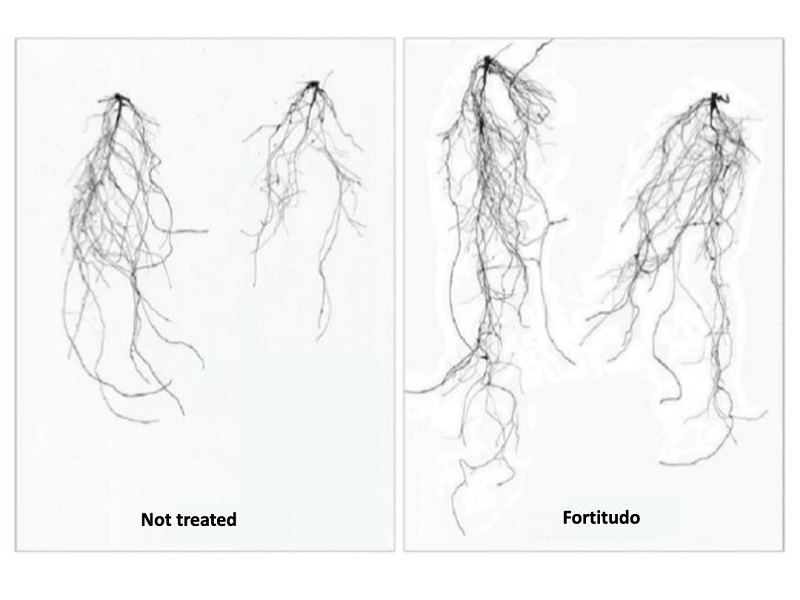
The name of this rooting promoter comes from the latin word for “strenght”: thanks to its nutritional and biostimulating properties, this innovative product is a real powerhouse for plants, ensuring vigorous growth and supporting roots.

Look at the result of a trial that our R&D team has made on tomato plants: the photos speak for themselves!


May 26, 2021
Folistim and Foliflo in the Philippines.

Healthy corn plants using FertiGlobal solutions

🌽How do you tell a healthy corn plant? Unquestionably, by the leaves!
Maintaining green leaves during grain and cob development is the most important factor to increase yields. The so-called “stay-green” crops keep on photosynthesizing so injecting more energy into the plant.
🎥 In this video you will hear the experience of a Research Manager in the Philippines who has been studying the bioefficacy of FertiGlobal’s FOLISTIM and FOLIFLO technologies on corn.
Have a look with your eyes: cobs are completely grown and grains are golden bright, while leaves are still green.


The harvest will be great, we can tell you for sure! 👌
April 20, 2021
Do you know that vegetable from the Philippines?

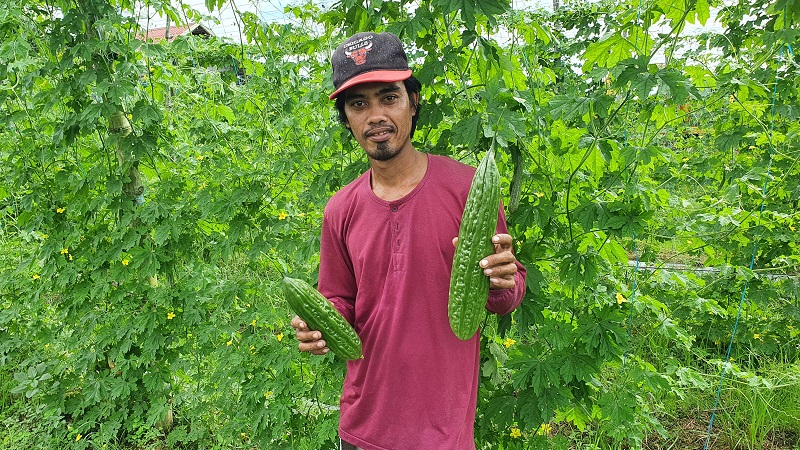
Bitter Gourd – know about it

It looks like a cucumber, but it has a bumpy skin and tastes completely different! 🥒
Bitter Gourd (commonly known as Ampalaya) is one the most popular vegetables in the Philippines.
🎥 In this video you will hear the experience of a local farmer who has recently bioactivated his crop with FertiGlobal’s solutions for the first time. Our Foliflo and Folistim technologies have shown their power right after the first application.
💪 Roots have grown stronger
🌱 Stems are larger
🥒 Fruits are more regular and better looking

These super green and healthy plants speak for themselves: enjoy the video!


Translate »