
#fertiglobal Archives - FertiGlobal

December 4, 2025
World Day

A celebration of soils

Take a moment to consider the wonder of soils

What an incredible resource we have in our soils.

Just look at the facts.

Soils provide the basis for 95% of the food consumed by the eight billion people around the world: it supplies 15 of the 18 chemical elements necessary for plant growth.

And that soil in which we grow our crops? It’s home to nearly two-thirds of the planet’s species: in fact, there are more living organisms in a tablespoon of soil than there are people on Earth.

Yet, despite this importance, around one-third of the world’s soils are classified as degraded or depleted. But it can take up to 1,000 years to produce just 2cm of ‘new’ soil.

Moreover, two billion people around the world grow crops that don’t supply enough of the essential micronutrients needed for a healthy diet. And if we were to adopt more sustainable soil management practices, we could increase the world’s food production by nearly 60%.

Facts that more people should know? That’s the aim behind World Soil Day, celebrated on December 5 every year since 2014. Originally setting out to raise global awareness about the role of soils in agricultural development, ecosystem functions and food security, the day now functions as a global platform for action and advocacy, an annual window onto the wider and sustained work of the Global Soil Partnership.

Agriculture’s role

Agriculture is the world’s biggest ‘user’ of soils. And our attempts to conserve them are made more pressing by the threat of climate change. Yet there’s much we can do: reducing erosion and pollution, enhancing water filtration and holding capacity.

The growing awareness of ‘regenerative’ agriculture – effectively putting the soil at the heart of the farming system – has helped to highlight the opportunities we have to make agriculture part of the solution to climate change and ecosystem degradation, through its ability to restore and increase soil biodiversity, improve fertility and support carbon sequestration.

The ‘overlooked’ soils

Those who live in towns and cities will recognise the importance of soil in supplying their daily food. But even though they might not walk upon it, covered as much of it is by concrete and asphalt and buildings and roads, urban soils are also fundamental.

That’s why the theme of this year’s World Soil Day is “Healthy Soils for Healthy Cities”, striving to emphasise how soil in the city can play a vital role in absorbing rainwater, regulating temperature, storing carbon and improving air quality.

The aim is to ensure that soils, wherever they are, are used appropriately and looked after sympathetically. Both in the countryside and in the city, soils can help us be greener, more resilient, and healthier.

FertiGlobal supports WSD

The sentiment behind World Soil Day fits perfectly with our own objectives here at FertiGlobal. We recognise the importance of soils: healthy soils are good for all of us. And that’s why within our product portfolio we have technologies, like EnNuVi, that are designed to work in partnership with the soil, not against it, thus helping growers to build and maintain healthy soils for themselves, their crops, and their customers.

Repeated or extended use of harsh chemical inputs can have a devastating effect on soil health and biodiversity, so simple decisions – like those we promote through our dedicated Crop Management Programmes – can significantly boost farmers’ efforts to conserve their soils.

That’s why every FertiGlobal product is ultimately designed to help a grower avoid or reduce their use of harsh chemicals. For soil’s sake.

November 27, 2025
Technical News

The Not-So-Invisible Enemy: Nematodes Destroy Yields Around the World

by Bernardo Borges, PhD – FertiGlobal Technical Manager Brazil

On a hot summer afternoon in Brazil, a farmer looks at his yield map and sees the same picture as always: red patches that grow a little larger each year, where the harvester slows down and yields stubbornly stay lower. The soil has been corrected and fertilized, weeds, pests and diseases are under control, and the nutritional program was carefully designed. Everything went according to plan. “It must be the weather,” he thinks. Maybe the soil is “tired.” What he usually does not realize is that, just a few centimeters below his boots, a different story is unfolding.

In the root zone, hundreds of thousands of plant parasites are quietly stealing his yield long before the crop reaches the trucks. Nematodes silently feed, weaken roots and destroy productivity, but they are often ignored simply because we rarely see them. Their impact on agriculture, however, is anything but small.

Across all continents and production systems, nematodes act like a hidden toll on plant roots. A meta-analysis conducted by the American Phytopathological Society, grouping crops such as soybean, maize, wheat, rice, potato and sugar crops, showed that approximately 14% of potential yield is lost even before harvest — amounting to around US$125 billion in direct losses every year. Similar scenarios are reported in tobacco, banana and other high-value crops. In those fields, nematodes are not just “one more factor”: they are often the difference between profit and loss.

Part of the reason these parasites are ignored lies in how their damage appears in the field. Nematodes do not leave bite marks, they do not show up as clouds above the canopy, and they do not cover leaves with mycelium. They puncture roots, induce galls, create lesions and compromise water and nutrient uptake. Aboveground, many symptoms resemble nitrogen deficiency, water stress, poor seed quality or soil compaction. Without a clear understanding of what is really happening, these signs are often underestimated and attributed to other causes. It is no coincidence that it is still common to hear farmers say, “I don’t have nematodes in my fields.” Not having them is one thing; not knowing they are there is something quite different.

Brazil offers a clear example of how serious this “hidden” problem can become. A recent study conducted by the Brazilian Nematology Society, in partnership with private institutions, analyzed soil and root samples from across the country and detected nematodes in more than 90% of the samples evaluated. As mentioned before, not so invisible after all. This pressure costs Brazilian agriculture several tens of billions of dollars every year. In soybean — the country’s flagship crop — when the effect of nematodes is considered over time and across different regions, the conclusion is simple and uncomfortable: one out of every ten harvests is lost to them. A similar story is seen in crops such as coffee, sugarcane and citrus, where these organisms do not only reduce yield, but also shorten the lifespan of perennial plantations.

Why, then, despite this scale of damage, does the problem still sometimes seem secondary in agriculture? One reason is psychological: we tend to focus on what we can see. Another lies in the way nematodes erode productivity—gradually, in a cumulative and silent way. A few percentage points less yield this year, a bit more next year, a coffee field replanted earlier than planned, a sugarcane field with a sharp drop in production. No single event feels dramatic enough to demand an immediate reaction, but the long-term effect on productivity and profitability is substantial. The good news is that this enemy is not invincible.

Turning nematodes from a chronic, silent loss into a manageable risk starts with a simple step: making them visible in our decision-making. In recent years, routine soil and root sampling has been shifting the mindset from “I don’t have nematodes in my fields” to “what can I do to control this pest?”. Biological solutions and advances in soil health strategies have added new layers of protection within an integrated management approach. Beneficial microorganisms that parasitize or antagonize nematodes, improvements in soil structure and organic matter levels, and the use of antagonistic crops or species that exude toxic compounds to these parasites — breaking away from conventional rotation — have all been added to this toolbox. Seeing, measuring and integrating these tools turns nematodes from a hidden villain into a manageable risk within the strategy for productivity and system longevity.

Ultimately, recognizing nematodes as part of the production equation is deciding that we will no longer silently give up one harvest in every ten. As we incorporate diagnostics, integrated management, biological innovation and plant bioactivation strategies into our routine, we move from merely reacting to red patches on the yield map to building more resilient, profitable and sustainable systems. The enemy beneath our feet remains microscopic, but once it is seen, measured and managed it loses the power to decide the future of the crop – it becomes just another variable under our control.

October 23, 2025
News from the market

Banana Drama

A third-quarter earnings call from Fresh Del Monte – one of the world’s largest suppliers of bananas – has intensified concerns about destabilisation of supplies of the world’s most popular fruit.

Keen readers of the FertiGlobal blog will recall our earlier story about the threat facing the common banana. That stepped up a gear last week, as Fresh Del Monte chairman and CEO Mohammad Abu-Ghazaleh highlighted the ‘mounting pressure’ on the industry.

Abu-Ghazaleh’s warning was starkly illustrated by confirmation that Fusarium Wilt Tropical Race 4 (TR4) was now present in Ecuador, the world’s sixth-biggest banana producer and the largest in Latin America.

He also warned that the ‘serious escalation’ of TR4 now present in Ecuador meant it was now ‘just a matter of time’ before TR4 spread to Central America.

The Fresh Del Monte CEO also pointed to the effect of another devastating banana disease, black sigatoka, in Costa Rica – where the company grows bananas on its own farms. He said the disease – caused by the fungus Mycosphaerella fijiensis – had seen production decline by 22% in a year. “That’s 18 million boxes lost,” he said.

Growers were taking every possible measure to control the disease, he said, but were facing severe financial strain as the price of the preferred fungicide has risen by nearly 50% over the past two years.

Against this background, it’s a sensible time to revisit the trials work conducted by FertiGlobal to identify additional measures available to banana growers. We looked primarily at our EnNuVi Technology, the patented nutrient-polyphenolic molecule whose main effect is strengthening the plant’s natural defence systems.

All the evidence shows that when a plant has access to a balanced combination of nutrients, its susceptibility to both biotic and abiotic stresses is greatly reduced. What’s more, the increased energy levels attributable to higher, more efficient photosynthetic processes mean that it can better use its own defence systems to ward off attacks by pathogens such as those responsible for black sigatoka.

If a plant can resist infection through its own means, then the need for expensive fungicides is greatly reduced – not only saving input costs for the grower but helping to lessen the chance that the fungus will adapt to the chemicals in use, lessening its effectiveness.

In trials conducted in India the FertiGlobal technical team examined the losses induced in banana plants through leaf wilting. Where plants were treated with the EnNuVi-enabled Semia, the percentage of wilting plants was slashed to less than 10%, compared with more than half for those managed with farmer standard practice. What’s more, while farmer standard practice led to a loss in crop ROI of over $200/ha, the investment loss in Semia-treated plants was reduced by 85%.

Meanwhile, in the Philippines – one of the countries where Fresh Del Monte has its own farms –, the trial proposed whether EnNuVi could increase the number of functional leaves on each banana plant, boosting overall plant health and energy levels to help it fight stress and attack.

Mantus provided the best result: a 44% increase in functional leaves, over the standard practice, after 45 days.

EnNuVi products will never be a direct replacement for mancozeb – they are not fungicides and don’t exhibit any fungicidal properties – they do fully express the concept of Total Crop Management. If applied at the correct time in the crop cycle, they can provide growers with an earlier alternative that may alleviate the need for subsequent applications of fungicides.

It’s not an outright solution, but it’s a positive step in the right direction.

September 16, 2025
Trip report

Upping the ante in Latin America

It’s been six years since FertiGlobal took its first tentative steps into Latin America. We knew back then that the acquisition of Agrigento Fertilizantes would mark the beginning of something special…and so it has proved to be, as Laura Galli – FertiGlobal’s Global Marketing Director – discovered during her recent visit.

We always banked on EnNuVi being the flagship Technology here. Brazilian farmers are well-informed and hungry for innovation – understandably, EnNuVi’s bioactivating properties, demonstrated through sound science, captured their interest immediately.

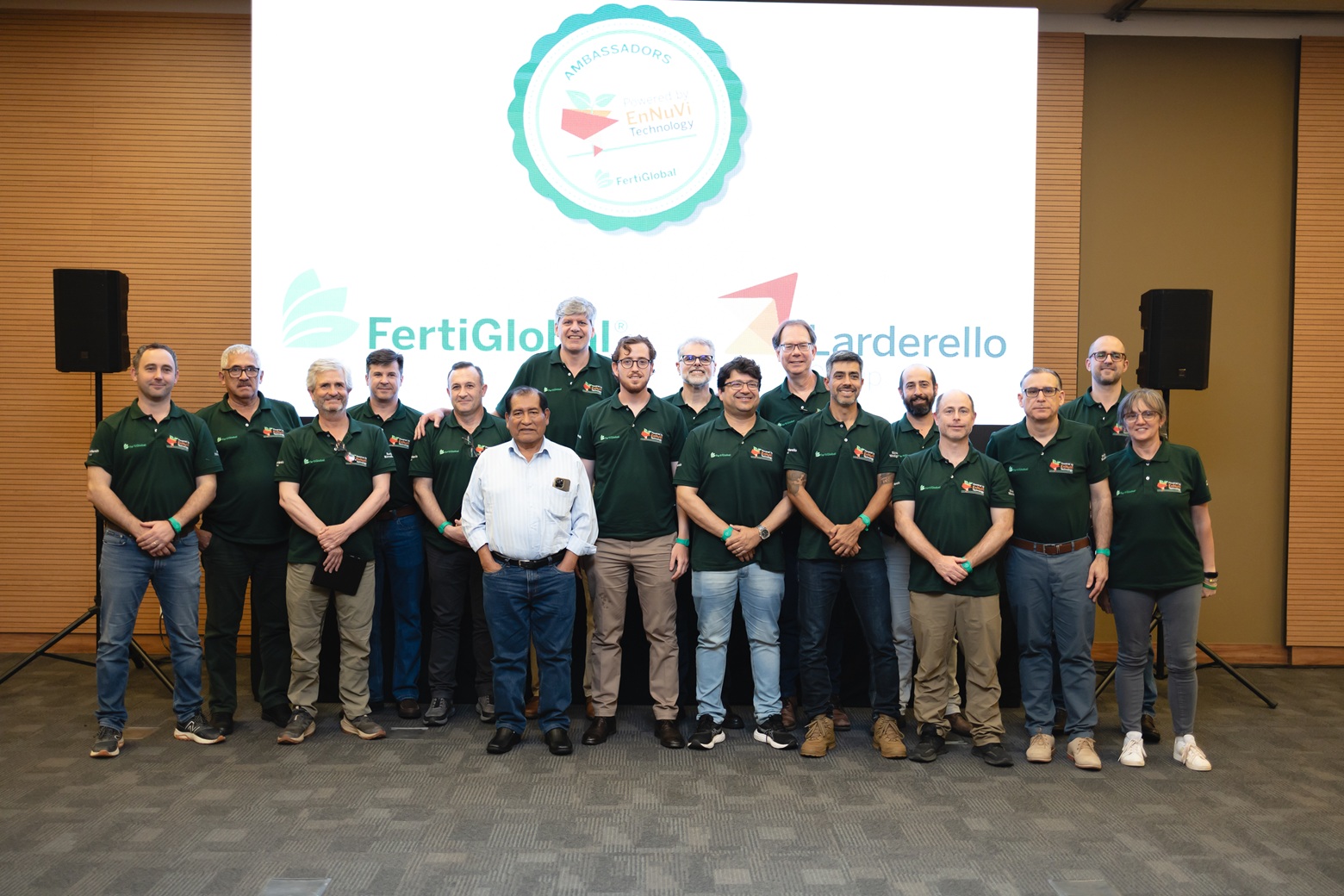
We’ve said before how we found Brazilian farmers often as well informed as their counterparts in North America and Europe. And this year we used that enthusiasm and familiarity as a lever – hosting the first LATAM EnNuVi Ambassadors’ Meeting.

I don’t use the term ‘turning point’ lightly – but that’s exactly what this was, drawing on scientific and technical collaboration to deliver a clear and ambitious route through the topic of plant bioactivation.

Bringing together 12 distinguished advisers and researchers from across the region – not just Brazil, but also Argentina, Chile, Peru and Paraguay – the two-day event was wide-ranging, taking in annual crops, vegetables, fruit trees, yerba mate, coffee and tea.


Global knowledge, local focus

Cerquilho, in Sao Paolo state, is FertiGlobal’s powerhouse in Brazil. Here lies the plant, the lab and the office – the three essentials for our success. In keeping with our commitment to global quality and consistency, all manufacturing takes place at the Larderello plant in Italy – here in Brazil, the products are received inbound in IBCs, to be made up into EnNuVi Technology-based products for distribution.

Lab work comprises quality control too, but also a sizeable R&D activity to provide for local needs. With the speed at which the Brazilian market is moving, coupled with the favourable regulatory environment – government policy is encouraging adoption of more sustainable methods and inputs – it’s vital that we can keep up to speed with local developments and opportunities.

Such examples were masterfully explained by Ricardo Wolfgramm, FertiGlobal Brasil marketing manager. Products like Strato, Assoluto, Camen, Veloce, Galle – each of these products has been developed by the FertiGlobal Brasil team to meet a need identified through local experience. Such is their suitability and applicability to local conditions that they are now rolling out into South and Central America too.

But of course the plant and the lab – they’re only as good as the products they turn out, which in turn are only as good as the results they yield. Our entire strategy in Brazil is about the farmer, so how do we reach the farmer? Through demonstration farms that allow us to explain what makes a product right for a given situation, its agronomic efficiency, and its comparison with conventional programmes. Total Crop Management, in action.


Coffee Colossus

If you didn’t know already, Brazil is the world’s largest producer of coffee. More than one-third of the world’s coffee – around four million tonnes a year – is grown in Brazil. Arabica and Robusta, the two major coffee varieties, thrive in the Brazilian climate; its coffee is favoured for low acidity and its nutty, chocolatey taste.

So, when visiting Brazil, where better to take a Global Marketing Director than coffee plantations?

Nossa Senhora da Conceição e Progresso is well-known to FertiGlobal, being the location of a major ongoing trial with one of the world’s most famous coffee brands. The operation uses FertiGlobal products on nearly a quarter of its planted area, the resultant coffee fully certified for sustainability, and remarkable for its autonomy: from product applications to harvest and processing, the whole sequence is automated.


Fazenda Jambeiro, in contrast, combines coffee production with dairy and poultry enterprises, but its claim to fame is longevity: some of its oldest plantations are 45 years old, producing sought-after beans that are regarded as amongst the highest quality on the market. Measured using the Specialty Coffee Association’s ‘cupping score’ – an aggregation of 10 attributes – a figure of 80 or above qualifies the beans as ‘specialty grade’. Fazenda Jambeiro? Scores of 90, regarded as exceptional.


Sugarcane: more than sugar

It’s not just coffee for which Brazil ranks top of the charts. The country also enjoys its status as the world’s top producer and exporter of sugarcane. Yet it’s not all about sugar: besides the many industrial uses for sugarcane, such as ethanol and bioplastics, Brazilians also take pride in using sugarcane juice to produce their national drink, cachaça.

Often described as ‘rum’s cousin’, national production of cachaça is around 1.3 billion litres a year – and just 1% of that is exported; Brazilians want to keep it to themselves! Nevertheless, in a bid to try to help the Global Marketing Director find the true ‘essence’ of Brazilian agriculture, the team laid on a visit to Escola Superior de Agricultura “Luiz de Queiroz”, in Piracicaba, to learn about the production of this famed spirit.

It’s one of nearly 1,300 cachaça producers nationwide, together responsible for more than 7,000 different product registrations: cachaça comes in many varieties, from the unaged ‘white’ to countless wood-aged specialities, some of which may lay in the barrel for up to 18 years.

With such a multitude of tastes and flavour profiles, it’s no wonder Brazilians have coined more than 2,000 words to describe it: everything from abre-coração (heart-opener) and água-benta (holy water) to bafo-de-tigre (tiger breath) and limpa-olho (eye-wash)!


After caipirinhas all-round, the following day it was time to get down to more business with our EnNuVi Ambassadors. A short introduction from Gustavo Branco, CEO of FertiGlobal Brasil, set the scene for Claus Brakemeier, Business Development Manager, to explain more about the principles underpinning EnNuVi Technology.

We were also pleased to host Professor Fabricio Rodrigues of Viscosa University, Prof Jorge Llontop and Prof João Ascari, who between them presented – to great interest – the scientific rationale behind EnNuVi and how it translates into real results in the field.

In short, a terrific inaugural EnNuVi Ambassadors’ Event. Not only could we demonstrate the positive effect of EnNuVi Technology on agricultural productivity and sustainability, but also benefit from an open exchange of experiences – the challenges, insights and lessons that they brought from their own agricultural contexts.

Its legacy is a network of experts across LATAM committed to agricultural innovation, and a reaffirmation of FertiGlobal’s leadership in developing sustainable solutions. It’s something we hope to repeat in further regions.

August 20, 2025
Green chemicals

Larderello’s A-Z: from Agriculture to ZHS

Agriculture, you know all about.

But ZHS?

You’re forgiven if you’ve never heard of it. It stands for zinc hydroxystannate and Larderello is about to start making a lot more of it.

We’ll be honest at this point: ZHS is not a new agrochemical. At FertiGlobal, our focus remains our founding mission: to reduce the use of harsh chemicals in agriculture, by developing bio-activating technologies and advanced crop nutrition solutions that boost plant natural defences and improve resilience to climate change and other adversities.

Yet the overriding objective common to FertiGlobal and Larderello, as the sister operating units of SCL, is to build on over 200 years of chemical innovation by looking to new solutions – be those products or processes – that reduce environmental impact and increase safety.

This is why ZHS is so important. It’s from the important category of flame retardants – chemicals that, when added to other materials, slow down or inhibit the spread of fire. They’re in widespread use – think of fabrics, construction materials, even aircraft interiors. All use flame retardants to either help prevent accidents, or to slow the further development of flames should a fire take hold.

But in a parallel with agrochemicals, some of the earlier, more commonly used flame retardants are being phased out, as newer and safer products come to market. ZHS is one of those newer products: its non-toxic profile, ability to reduce smoke emissions and significant end-of-life environmental advantages (for example, it can be recycled without issue) have helped make it an ‘in demand’ chemical. It can be incorporated into a wide range of materials including important polymers (or plastics) such as PVC and nylon, including many of the plastics used in horticulture – for example in greenhouses.

Larderello started to manufacture ZHS in 2011. Now, with increased demand for the chemical and the company’s overall commitment to reduce its environmental footprint across every aspect of its operations – from production to end-use – the time has come to invest in a new plant that will not only double production capacity but also reduce the energy needed to produce every kilogram of ZHS.

What’s more, this commitment to greener technology, sustainable production and resource-efficiency qualifies the new plant as an Industry 5.0 project. In turn, that’s meant we’ve been granted a €6.5 million loan from UniCredit’s Futuro Sostenibile Plus, an initiative dedicated to companies that commit to improving their environmental, social and governance (ESG) performance.

That’s also come with the backing of the Growth Guarantee from SACE, the insurance-financial group owned by Italy’s Ministry of Economy and Finance. Which, as SACE itself explains, ‘elevates a company like SCL and contributes to our country’s green and digital transition goals’.

For us at FertiGlobal, the ZHS news reaffirms to us – and we hope our customers too – the real commitment that underlines the FertiGlobal approach. Sustainability isn’t just a veneer; it runs right through us, in everything we do.

Take EnNuVi, for example. Awarded through the European LIFE programme, this is – literally – a roots-up technology aiming to change the environmental impact of agriculture on the environment, without compromising the demand for food and productivity. By rethinking our approach, we were able to create a brand-new formulation combining bioactive polyphenols with nutritive elements. Its effect? The triggering and control of plants’ natural defences to counter biotic and abiotic stresses, all the while decreasing the use of pesticides, reducing water consumption, and improving on-farm resilience.

Wherever there’s an opportunity to reduce environmental impact, to make better use of resources, to make all our products human-centric – from flame-retardants to farming, we’ll do it.

July 24, 2025
IPNC 2025

Bean and done it… more

Scientists will be scientists. Experiments and trials are their lifeblood.

And as we explained in our previous blog, these trials are vital in ensuring the success of FertiGlobal’s Total Crop Management approach. We need science, we need evidence, we need proof.

Where better to source that evidence than from a scientist who’s conducted his own experiments for no other reason than to satisfy his own interest?

That’s what led Professor Carlos Ribeiro Rodrigues, of the Goiano Federal Institute at Rio Verde, Brazil, to present a set of studies about FertiGlobal’s EnNuVi Technology at this month’s International Plant Nutrition Colloquium, held in Porto, Portugal.

Boosting Natural Defence

EnNuVi products regulate and influence crop genes, allowing it to trigger and control plants’ defence and resistance systems. In conjunction with one of his students, Professor Rodrigues began a trial with the EnNuVi products Mantus and Semia.

In seeking to get the most practical benefit from the trial, Rodrigues and his student – Humberto Pistore Eleuterio – chose to work with the common bean, Phaseolus vulgaris. Why? Because despite being a staple crop in dozens of countries, the smallholders who grow it struggle to make it productive. They’re also the farmers least suited to reliance on harsh chemicals, such as fungicides.

A product such as Mantus, which harnesses the known abilities of copper compounds in combating disease and combines them with polyphenols, or Semia with its zinc, present real opportunities to reimagine the production of staple crops in a way that benefits people and planet too.

Mantus – The Trial

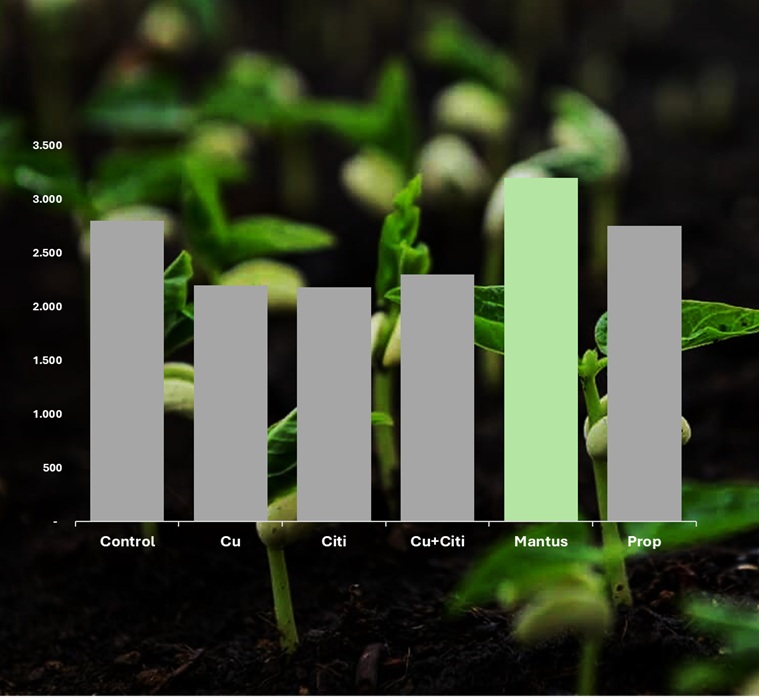
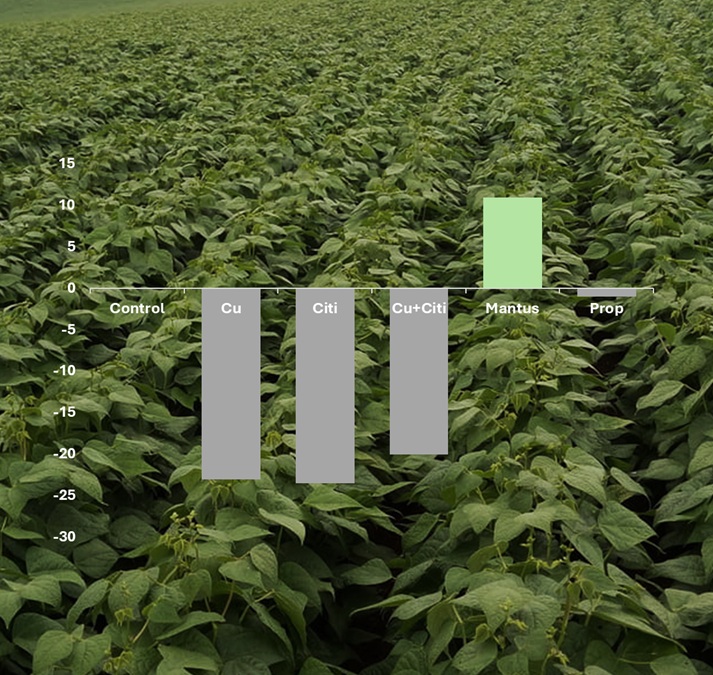
Effects on photosynthesis, growth and yield were assessed. A rigorous protocol was established, involving a randomised complete block design deploying five treatments: copper (Cu), cytokinin (Cyt), Cu + cytokinin (Cu+Cyt), copper + polyphenol (Mantus), and propiconazole.

Applications were made at V2 (two fully expanded trifoliolate leaves) and V5 (axillary bud development) growth stages.

Photosynthetic pigments and chlorophyll fluorescence were measured seven days after treatment. Photosynthesis and above ground dry mass were assessed at the second measurement, while at harvest thousand-grain weight, pod number and grain yield were recorded.

Results showed that during the vegetative stages, propiconazole and Mantus showed superior performance in phosynthetic pigments. No differences in photosynthesis, dry mass, pod number or stems were observed between treatments.

However, Mantus out-performed all other treatments in yield, thousand-grain weight, and overall agronomic efficiency.

Semia – The Trial

In subjecting Semia to a similar assessment, Rodrigues and Eleuterio were seeking to understand its potential for stress alleviation.

The common bean is highly susceptible to both abiotic and biotic stresses; climate change is likely only to increase their incidence and intensity. Plant scientists have previously studied ‘resistance inducers’, such as silicon (S) and nitric oxide (NO).

Silicon is known to improve a plant’s mechanical resistance, toughening leaves and stems. It also reduces transpiration and increases photosynthesis.

Nitric oxide works to activate the plant’s systemic acquired resistance (SAR).

Meanwhile, Semia contains polyphenols and zinc, both of which are known to boost antioxidant enzyme activity. Antioxidant levels rise sharply when plants are stressed.

Again, a randomised block design was utilised for the trial, comparing silicon (Si), nitric oxide (NO), Si+NO, and Zinc+Polyphenol (Zn+Poly) against a control. Treatments with Si, NO, and Si+NO were applied at V3 and R8 stages, while Zn+Poly was applied at V3 (three fully expanded trifoliolate leaves), V4-R (reproductive, full pod), and R8 (full maturity).

Photosynthetic pigments, chlorophyll A fluorescence, and photosynthesis were

assessed seven days after R8. At harvest, pod number, thousand-grain weight, and yield were evaluated.

Rodrigues and Eleuterio found that both Semia and the silicon/nitric oxide combination reduced chlorophyll A indices, while Semia also improved chloroplast structure.

However, what really matters to the farmer in the field is the effect on yield. Here Semia came out on top for both yield and pod number, thanks to its effects on overall photochemical efficiency and photosynthesis.

In conclusion…

Thank you to Professor Rodrigues and Humberto Pistore Eleuterio for their diligent studies into Mantus and Semia!

Of course, we’re delighted to see our own results working with these products – and our knowledge of how the entire EnNuVi portfolio works – confirmed by independent experiment. There’s still a lot of uncertainty associated with the biostimulant category, but at FertiGlobal we’ve always focused on the science rather than the ‘puff’. Results like this not only serve to vindicate our own ‘science first’ approach, but do much to assure others that biostimulants have an exciting future in making agriculture more sustainable.

June 30, 2025
Anticipation of IPNC 2025

Bean and done it

For a scientist, there are few things more satisfying than designing, conducting and completing an experiment that confirms a hypothesis.

As you’d expect, it’s this concept that gets FertiGlobal’s crop scientists out of bed every morning: their commitment to better understand a crop’s nutritional needs. Why? Because by meeting those needs, we can influence everything from growth to yield to plant health, which can in turn give growers what they seek: better crops, better soils, better food and better farming.

But every scientist will also tell you that there IS one thing better. And that is when another scientist takes such an interest in your work that they conduct their own scientific studies – and uncover results that corroborate, independently, all your hard work.

Which is why we’re eagerly anticipating this month’s International Plant Nutrition Colloquium, hosted by the Portuguese city of Porto between 22-25 July. This year’s event centres on Cultivating Resilience: Plant Nutrition for Food, Feed, and Health.

Here, Professor Carlos Ribeiro Rodrigues, of the Goiano Federal Institute at Rio Verde in Brazil, will present a set of studies about FertiGlobal’s EnNuVi Technology-based products – a perfect alignment with the 2025 theme.

Why EnNuVi?

EnNuVi is what we would probably describe as FertiGlobal’s flagship technology. An acronym of Enhance, Nurture, Vitalize, EnNuVi is a bioactivating Technology that has a unique ability to trigger and control plants’ defence and resistance systems.

EnNuVi Technology based products regulate and influence the genes in the plant, helping to protect it from stress events. Its molecule of essential plant nutrients, active polyphenols and selected natural ingredients helps the crop to grow, healthy and strong, to reach its full yield potential.

What most excites us– and many others – about EnNuVi Technology-based products is how they can boost a crop’s natural defence systems. In turn, this can significantly reduce pesticide use. And thus it meets the central tenets of FertiGlobal’s philosophy: reducing farming’s impact on the environment, and ensuring farmers can deliver high-yielding, high-quality output without requiring excessive resource use (EnNuVi also reduces crops’ water consumption).

It was these features that caught the attention of Professor Rodrigues. In conjunction with one of his students, Humberto Pistore Eleuterio, he organised a study of Mantus, one of our most popular EnNuVi-based products. And it’s these results – together with a parallel study into Semia, another product in the EnNuVi portfolio – that will be presented at IPNC next month.

For the study, Rodrigues and Eleuterio chose the common bean (Phaseolus vulgaris). It’s a key source of protein, vitamins and minerals; in many countries around the world it’s a staple crop and a primary foodstuff.

Despite this, the common bean’s productivity falls short of expectation. To grow better crops, more reliably, more efficiently and in greater quantities, growers – many of them small-scale farmers – must balance agronomic efficiency and resource optimisation. And then there’s the environmental sustainability: current agronomic practice relies on plant growth regulators and fungicides.

The study looked at how Mantus, which contains copper compounds alongside plant polyphenols, and Semia (zinc and polyphenols), might affect photochemical efficacy, photosynthesis, yield and other metrics. EnNuVi products were compared against products used in conventional farmer practice.

We’re not going to steal the team’s thunder by revealing the results here; for those, you’ll have to wait until we share the full information in next month’s blog.

But they did make our own scientists very satisfied…

Look out for the rest of the story next month. If you’re attending IPNC, look out for the poster – it will be presented on Day 3, July 25.

May 31, 2025
Mexico tour

Down Mexico Way

Mexico. You’re probably thinking about the unique food, characterful tequilas and the distinctive tunes of the Mariachi.

But while FertiGlobal’s Josefina Mackern enjoyed all these Mexican delights during her distributor support visit, it was the country’s diverse and extensive agriculture that brought her there.

As FertiGlobal’s head of technical development for the LATAM region, Josefina says it’s vital to get out in the country and – in typical FertiGlobal fashion – have ‘boots on the ground’.

“Mexico is a nation with enormous agricultural potential,” Josefina says. “Agriculture is an important economic sector for the country, and many farmers display a strong eagerness to adopt new technologies.

“For FertiGlobal, that attitude and interest make it an exciting market for innovation and growth.”

There’s great diversity in Mexican agriculture. Crops are the most important sector, contributing around half of all agricultural output. Corn, sugar cane, wheat, barley, tomatoes, bananas, citrus, mangoes, soft fruits, and coffee are among the most widely grown crops, annual outputs being sufficient to make it a top five or top ten producer for many categories.

For tomatoes and avocados, however, Mexico ranks as the world’s largest exporter. Next time you’re buying avocados at the grocery store or supermarket, check out where they were grown. There’s a good chance they’ll have been grown in Mexico.

Josefina’s two-week stay in Mexico first saw her supporting Koprimo, FertiGlobal’s longest-standing client in Mexico. Active across multiple sectors in the Mexican economy, from agriculture to automotive, and construction to mining, the company’s built an enviable reputation over its 45-year history – primarily for its socially responsible outlook.

“It’s no surprise that we saw them as an ideal partner for Mexico,” explains Josefina. “They recognise the agricultural industry’s responsibility to humans and the environment. FertiGlobal’s philosophy, as encompassed by our Four Pillars and the constant pursuit of sustainable farming, is a perfect match.”

Top of the list was attending Expo Agroalimentaria Guanajuato, a four-day show attracting professionals in the agricultural formulation and crop protection industries. It was a marvellous opportunity to engage with a wide cross-section of Mexican agriculture, meeting potential clients and discussing how FertiGlobal’s innovative technologies can provide the solution to many of their most intractable challenges.

“It’s the second time we’ve participated in the Expo,” notes Josefina, “and it really gives the most valuable, accessible way of connecting with key industry players, while spending time with the knowledgeable and enthusiastic Koprimo team – Héctor Ginez, Víctor Hugo Rodulfo, and Julio César Simiano.”

But valuable though these events are, there’s nothing like getting out in the field to see how FertiGlobal products are performing on-farm. Hand-in-hand with this is the ever-important need to see how growers respond to the FertiGlobal philosophy, and providing technical and commercial support to our distributors.

All this Josefina found with a trip to the San Quintín Valley. Located in Baja California, some 300km south of Tijuana, this is an area renowned for intensive agricultural production, growing everything from tomatoes, berries and cotton to cereals and vegetables.

But intensive farming has taken its inevitable toll – growers report depleted soils, and it’s recognised as an area on the ‘front line’ of climate change: altered rainfall patterns have increased the need for irrigation, leading to worries about groundwater depletion and desertification.

“Farmers are looking for products that can help them mitigate the effects of climate change on their crops, such as abiotic stress, while vitalizing plants with healthier and stronger growth, fighting disease without the need for harsh agrochemicals,” explains Josefina.

Mastranto is FertiGlobal’s new distributor for the northwest coast in Mexico. They sell to farmers through La Yunta stores; Josefina spent her first day in San Quintín in a technical training session.

“Mastranto received their first FertiGlobal products in December 2024, so we were very keen to prepare the team to understand their technical performance, how to deploy products to allow farmers to best solve their challenges, and to answer as many questions as possible.”

EnNuVi Technology has generated the most interest with Mastranto – Mantus, Laran and Lasa in particular – with FOLIFLO and FOLIMAC alongside, so Josefina’s next step was to see how these would go into action with producers. Tomatoes and strawberries are the prime targets for Mastranto with these products.

“Of course, no visit to Mexico would be complete without a study of the nation’s vineyards – it’s great that so many of our products have strong use cases in grapes and vines,” Josefina points out.

“The San Quíntin Valley is one of Mexico’s leading wine regions,” she says, “so it’s very exciting that we have producers, such as Dubucano and La Cetto, who look at FertiGlobal’s products and see solutions that could be right for them.”

Josefina says she’s looking forward to growing FertiGlobal in Mexico with help from such supportive and enthusiastic distributors.

“We’re poised to develop and explore a vast sea of opportunities in this expansive country. I feel confident about how the FertiGlobal philosophy of Total Crop Management is understood and appreciated here, and excited by its potential with such a vibrant, significant agricultural producer.”

April 23, 2025
Chilli focus

The Heat Is On – for EnNuVi and FOLISTIM

Do you embrace the chilli pepper, luxuriating in the heat it brings to your favourite dishes, and swapping anecdotes about the Carolina Reaper and Pepper X? Or would you rather enjoy the mild kick of the Serrano, steering clear of anything with a heftier punch?

If you’re of the former persuasion, then it’s likely you’ll also seek out the delights of dried chillis, whether whole or as chilli powder. And there’s a strong likelihood that your favourite spice was grown by one of India’s 100 million farmers.

Yes, we’re back in India again. It’s a country in which FertiGlobal has great interest, as regular blog readers will know from previous writings about ginger, apples, and cardamom.

India isn’t shy with its agricultural production, ranking at or near the top across a range of common crops. So perhaps it’s no surprise, given the country’s culinary reputation, to discover that India is the world’s biggest producer of dried chillis and peppers, accounting for about 40% of global production. Not just a producer, either: it’s also the biggest consumer and exporter.

Most of that production is concentrated in the state of Andhra Pradesh, on the country’s east coast. According to official data, chilli cultivation here utilises nearly 200,000 hectares, producing around 1.12m tonnes annually. It’s to that state we headed, with our branch in India SCL Commercial, to explore the potential of the FertiGlobal products Mantus and Semia to help reduce incidence of the most common diseases afflicting the region’s chilli crops.

A transition to Total Crop Management

As India’s farmers commercialise and move beyond their traditional ‘homestead’ farming systems, FertiGlobal believes there’s a strong case for introducing them to new, more productive practices – including the fundamental FertiGlobal principle of Total Crop Management.

Through Total Crop Management, we think about every crop throughout its lifecycle: what it needs, and what will make it thrive, at every stage of growth. So, as appropriate in each crop, that’s from germination to emergence to flowering to ripening to harvest, and so on.

Total Crop Management is primarily about crop nutrition. A plant that has its nutritional requirements fully satisfied will be better placed to stimulate and enact its own natural defence processes.

With Total Crop Management, you get a healthy plant that stays healthy – because it’s well-placed to defend itself against the invading pathogens that cause disease, depress yields and lower quality.

FertiGlobal Technologies

Our Total Crop Management approach is espoused by our Technologies – the families of products that our R&D team has formulated to provide farmers with sustainable solutions.

Each Technology combines plant nutrients, biostimulants and bioactivators to deliver specific benefits through particular mechanisms and modes of action within the plant.

For our chilli trials in India, we focused on our EnNuVi Technology, a patented technology that comprises high analysis formulations with nutrient polyphenolic molecules (NPM). NPMs play a prime role in activating the plant’s natural defences, by helping to manage the right balance between the production of Reactive Oxygen Species (ROS). ROS are a natural by-product of photosynthesis, but can be damaging if levels become too high.

All EnNuVi Technology products work to ENhance the plant’s performance against stress, by NUrturing with NPMs and VItalising the crop for stronger, healthier growth.

Such is the innovation encapsulated within EnNuVi that it has been recognised within the European Union’s LIFE programme for its objective of reducing the environmental impact of agricultural practices, without compromising the need for food and ever-higher yields.

EnNuVi in chillis

The village of Lingala, a farming community in the Krishna District of Andhra Pradesh, was the backdrop for our trials. Here, we sought to evaluate the performance of two EnNuVi products – MANTUS and SEMIA – on controlling anthracnose, dieback, powdery mildew and wilt diseases.

Nine farms within Lingala were involved in the trials. In all cases, the FertiGlobal products were compared against treatments made using standard farmer practices (SP).

Visually, plants treated with the EnNuVi Technology-based products were more upright and greener. In particular, farmers commented on the added ‘shine’ that the products seemed to impart to the fruits: this was unusually noticeable, and something they attributed to the improved health status of the crop.

Of course, we’re never happy with subjectivity alone. Yet the farmers’ optimism about their healthier crops wasn’t misplaced: what we saw, amongst all the treatment protocols for MANTUS and SEMIA, was not only an increased number of fruits per plant, but also the lowest number of diseased fruits per plant.

By adding both MANTUS and SEMIA to their treatments – which, in this part of India are commonly made by knapsack sprayers – farmers saw positive returns on investment over SP. Both products showed positive, consistent performance – convincing the Lingala farmers that EnNuVi Technology would be worthwhile.

FOLISTIM in chillis

Like EnNuVi, FOLISTIM is a FertiGlobal Technology designed to fulfil our ambition of Total Crop Management. It’s been developed with a specific goal in mind: promoting a vegetative reset in the crop, after periods of stress. Again, its focus is on good nutrition, by optimising plant nutrients to enhance final fruit quality and maximise its storage potential. FOLISTIM not only relieves abiotic stress but can improve resistance to it too.

With FOLISTIM, we went to the west coast state of Maharashtra. If Andhra Pradesh is known as India’s Chilli Bowl for its high production, then Maharashtra is the Chilli Paradise, producing some of India’s most sought-after chilli varieties such as the Dhani, Jwala, and the famed Bhiwapur.

Here, we looked at the effects of CREO on yield and commercial quality. Formulated around phosphorus, potassium and boron, it’s designed to support crops in their ripening. Of course, there are several factors involved in optimising ripening, so this became quite an extensive trial, measuring a variety of metrics such as flowers per plant and the numbers dropped, fruits per plant and the numbers dropped, plus plant height and eventual fruit yield.

Across every metric, CREO-treated plants performed significantly better than those plants receiving SP. Unsurprisingly, therefore, final yields showed significant increases: up to 20% over SP, with the increase delivering a net revenue benefit of nearly USD100 per ha.

Sample of the chili harvest and its weight (g) per plant according to the different treatments

That’s a return on investment of 2.68 – which just goes to show how a Total Crop Management approach not only benefits the plant and the planet, but profitability of the grower too.

For fuller details of these commercial trials in India, do get in touch: we’d say they’re hot!

February 17, 2025
News from California

Have bees, will travel…

One of the world’s largest managed pollination events has just got underway in California, as the state’s almond orchards burst into flower.

If you’re an almond aficionado – partial to the odd macaroon, a lover of marzipan, or prefer almond milk to the dairy mainstay – it’s almost certain that your pastry, snack or drink was made with Californian almonds.

The world relies on California for its almonds: 80% of global production is concentrated in the Golden State. Stretching from north to south, the 1.3 million acres of almond orchards provide nearly $6 bn for the state’s economy every year.

All that acreage needs reliable pollination: two hives for every acre of orchard, to be precise. Too valuable to leave to chance from wild bee and insect populations, every February beekeepers from across the United States descend on California, bringing with them hives for hire and utilising more than half of the US’s total commercial honeybee population.

Nor do they stay in California. Once they completed pollination of the almond orchards, the same bees begin a pollination circuit that includes the apples of Washington state, Floridian tangerines, and the famed blueberries of North Carolina.

It’s this fanatical focus on getting the most from every almond acre – the surety of pollination, precision irrigation, and more and more effective harvesting, to reduce mechanical losses – that has helped contribute to an incredible growth in productivity since the first orchards were planted in the early 20th century.

Back then, a grower would be happy to see a little over 200 lbs/acre (225 kg/ha). Today, any one of California’s 7,600 almond growers can expect at least ten times the yield, and as much as twenty times more – 4,000 lbs/acre (4.5 t/ha).

Nevertheless, despite this huge increase in output and land-use efficiency – without the improvement in yield, today’s crop would require 13 million acres of orchard, 13 per cent of the state’s land area – almond cultivation still has its detractors.

That’s why FertiGlobal was delighted to take part in the Almond Board of California’s annual conference. Held in Sacramento in December, Rooted Together looked at how the state’s almond industry is adapting to meet growers’ needs and consumers’ expectations.

From a grower perspective, a stewardship program seeks to encourage them to think longer term when growing trees, while continued investment in research and outreach is designed to further improve productivity while reducing the ‘production footprint’. Meanwhile consumer campaigns seek to increase awareness of almonds’ health benefits while setting the record straight on issues such as water use, on-farm biodiversity, and carbon sequestration.

At FertiGlobal, we’re especially interested in supporting growers to make more informed choices about their approach to key agronomic issues such as nutrient management and pest and disease control. Our ‘bread and butter’ is helping farmers to improve their productivity through increases in yield, better quality crops, and more efficient use of resources. At the same time, we strive to develop unique solutions that observe regulatory parameters and ever more stringent environmental obligations.

It’s this attitude, comprising grower resilience and sustainability with our own use of sound science, that underpins our Total Crop Management philosophy. And it’s one that’s meets the needs of California’s almond growers head-on: using an understanding of plant biochemistry, physiology and nutrition to develop solutions built on a wide-ranging holistic platform.

Not for us the siloed route of looking to solve each individual problem with an individual solution. Instead, we have Technologies like EnNuVi, with its unique bioactivating mechanism that can help trigger and control crops’ defence and stress mitigation mechanisms – helping the plant to help itself, rather than allowing it to reach the stage where chemical intervention becomes necessary.

For FertiGlobal, that’s the real crux of the matter: we’re not advocating for a world without any conventional, chemical crop protection products. Instead, we’re looking to create early, nutrition- and biochemical-based interventions that can reduce, or remove, the NEED for chemical use.

Perhaps it really is as simple as Less is More: less chemical, more sustainable.

Translate »