

#bioactivation Archives - FertiGlobal

June 29, 2026
Philippines focus

This country’s agricultural production will surprise you

Shall we talk about superlatives? That is to say, agricultural world records. Which countries spring to mind?

Would it be Ukraine, known as the ‘breadbasket’ of Europe for its astonishing wheat yields? Brazil, perhaps, as the world’s largest producer of commodities such as coffee and soybeans? Or we could settle on the United States as the world’s largest exporter of agricultural products, and China as the country that produces the most food.

Yet while all those records are valid and easily verified, there’s another country that’s worked itself – agriculturally – into the top echelons of world production, quietly and methodically.

That country’s the Philippines.

Perched precariously across the Pacific Ocean’s typhoon belt, the chain of 7,641 islands that comprises the Philippines probably wouldn’t make it into many people’s top-ranking agricultural producers.

Yet as we saw in our last blog, it’s a country in which FertiGlobal has keen interest – precisely because we’ve already seen for ourselves its quiet determination to deliver agricultural success.

The Philippines may not have the agricultural volume to help feed the world, but it certainly helps feed Asia Pacific. Agriculture ranks third in the Philippine economy, behind services and industry, and provides employment for one-fifth of the workforce.

And that ‘quiet determination’? OK, the Philippines can’t lay claim to a number one position in commodities like coffee or soybeans. But how about the banana, the world’s most popular fruit? Number one exporter in Asia and number two worldwide. It’s the world’s second-biggest producer of coconuts, narrowly behind Indonesia.

But its biggest claim to fame – if you can call it that, given its quiet approach – is the near-total monopoly it has on the production and export of a commodity that’s found its way into applications around the world.

Abacá: the planet’s strongest fibre

Its name, Musa textilis, provides the first clue. Botanist readers will identify this as part of the banana family. Native to the Philippines, it provides an exceptionally strong fibre that’s been used for centuries not only for weaving durable cloth and fabric, but also for robust tasks such as maritime rope. This resilience has lent itself to more modern applications: bank notes, tea bags and as a petroleum-free material for the automobile industry. There’s probably abacá fibre near you right now.
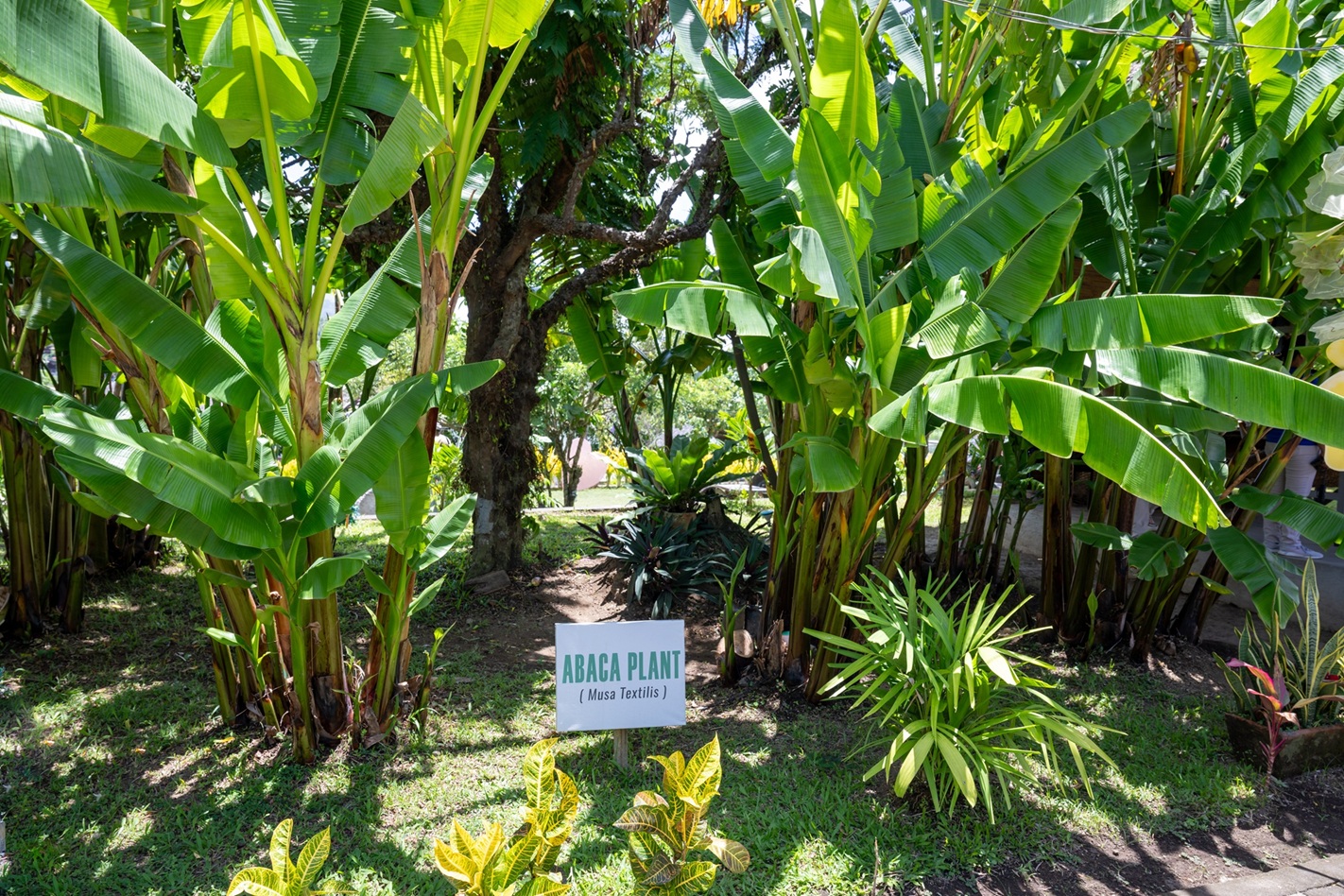
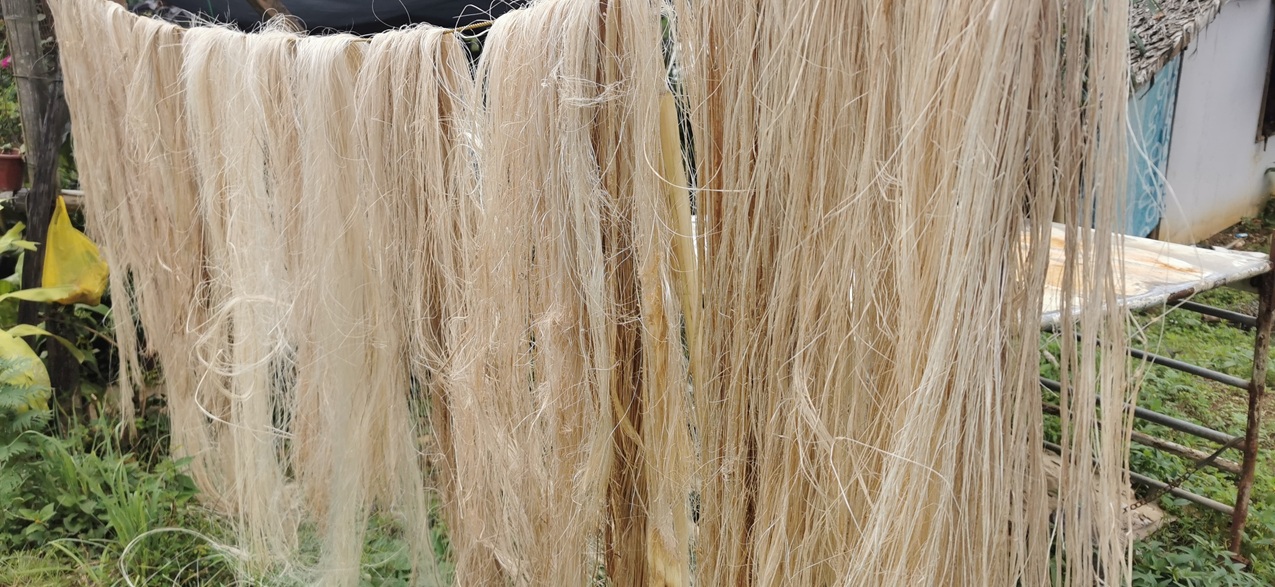
Grown only in the Philippines, Ecuador and Costa Rica, it’s Philippine abacá that dominates the trade with 87 per cent of the global market. In the past – notably during the rapid growth of maritime trade and activity seen in the 19th century – abacá regularly vied with sugar and tobacco as the Philippines’ most valuable export crop. Today, it’s worth around USD100m per year, covering around 140,000 hectares.

Smallholders account for the majority of Philippine abacá production. While harvesting – largely by hand – is labour-intensive, the crop itself is highly sustainable: a plantation can be viable for up to 30-40 years, providing robust soil erosion control on the volcanic slopes where it’s commonly planted and lending itself to intercropping to aid biodiversity. Waste materials are often recycled into organic fertilisers.

Going bananas

If you know about bananas, you’ll know about TR4. You’ll also know that Cavendish is the dominant banana variety grown for export.

And that TR4 and Cavendish are not compatible.

That’s because TR4 – Fusarium Wilt Tropical Race 4, to give it its full name – is the worst enemy of Cavendish. It destroys the plant, slowly but surely, and then remains dormant in the soil, ready to infect any replacement plantings.

The disease first hit the country in 2005, devastating the industry and shrinking production from 89,000ha to just 51,000. While the only ‘cure’ is to plant a resistant variety – difficult to produce, thanks to bananas’ unique genetic composition – the country has also been fighting back by improving farm management practices to better manage the disease, and the deployment of technologies like AI, drones and remote satellite sensing to detect and contain outbreaks at an earlier stage.

Another concerning disease is black sigatoka, brought on by the fungus Mycosphaerella fijiensis. A foliar disease that causes lesions, chlorosis and physical collapse of the leaf, black sigatoka ultimately kills the plant. Control can be achieved through chemical means, but demands an intense spraying programme of up to 50 applications per year – which can still result in a 50% drop in yield.

While the answer to both TR4 and black sigatoka almost certainly lies in the development and commercialisation of new varieties, FertiGlobal has found that its EnNuVi Technology can lessen the impact of the latter disease.

EnNuVi’s patented nutrient-polyphenolic-molecule focuses on strengthening the plant’s natural defence systems. Evidence points to a balanced combination of nutrients – putting the plant in good stead – fortifying the plant, reducing its susceptibility to both biotic and abiotic stresses. Better health promotes increased energy, charging its in-built mechanisms to ward off attack by pathogens such as Mycosphaerella. When a plant resists infection, a farmer needs fewer fungicides.

A trial in the Philippines proposed whether EnNuVi would increase the number of functional leaves on each banana plant, boosting overall plant health and energy levels to help it fight stress and attack from black sigatoka. Of all the EnNuVi products tested, Mantus provided the best result: a 44% increase in functional leaves, over the standard practice, after 45 days.

Of course, EnNuVi products can’t be seen as a direct replacement for a fungicide like mancozeb, because they have no fungicidal properties. But when applied at the correct time in the crop cycle, they can provide growers with an earlier alternative that may alleviate their need for fungicides at a later date.

A Philippine Vision

It’s developments like this that are fuelling FertiGlobal’s enthusiasm for success in the Philippines. A philosophy of ‘Robust Protection’ (known locally as ProtekTibay) lies behind the communication and application of FertiGlobal products amongst Filipino farmers. Crop resilience is the name of the game – not just against disease, but also climate change. The country’s location on that Pacific typhoon belt makes it highly vulnerable to extreme weather events; the intensifying El Niño suggests that the coming year will demand farmers use every tool in the toolbox.

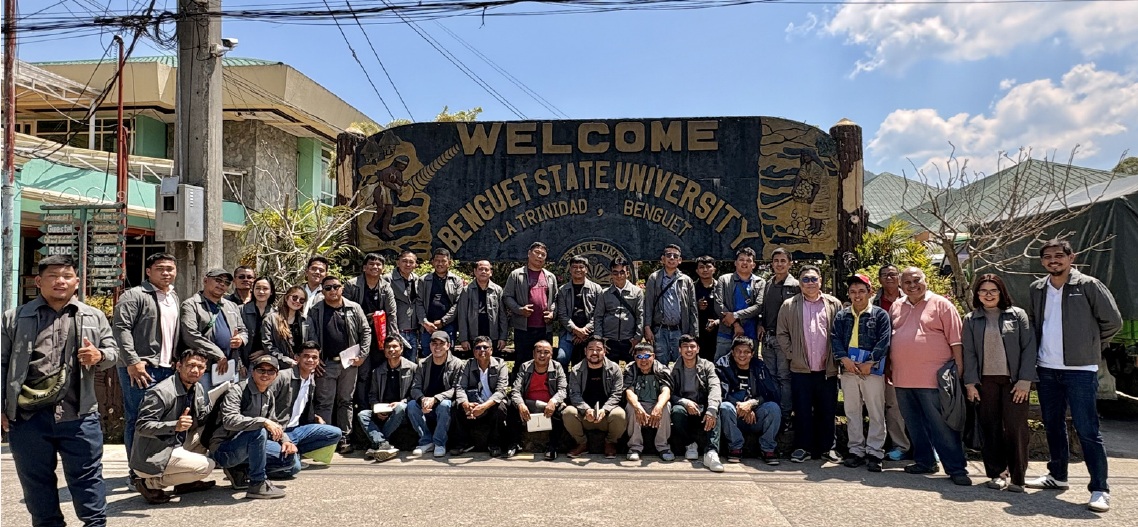
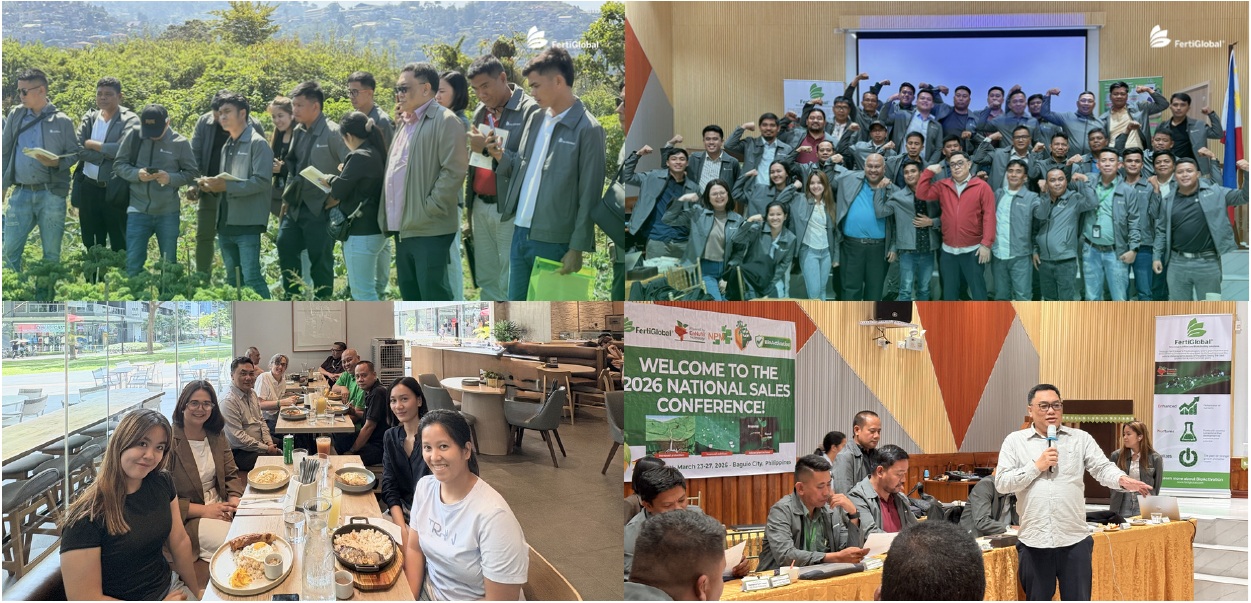
And during this year’s ‘FertiGlobal Summit’, which brought together Team FertiGlobal Philippines in its entirety, this commitment to the market was demonstrated without doubt. Visiting farmers snapped up an entire inventory of FertiGlobal products after seeing for themselves the demonstration trials:

  • The effect of Turan and Nemes on chilli plants battling extreme heat waves and weather shifts
  • Bacterial wilt in tobacco, devastating conventional crops while those treated with Fortitudo, Semia and Nemes continued to stand healthily
  • The ‘signature Technology’ effect of Turan, Fortitudo, OK and Nemes on okra, enabling exports to Japan to meet the country’s strict phytosanitary and quality standards
  • Peak performance in the country’s staple crop, rice, thanks to bioactivation with Semia and OK that kept leaves vibrant, lush and green through to harvest.

With deep commitment, appropriate products and convincing results – not to mention keeping them dancing towards wellness – FertiGlobal Philippines continues to empower local farmers to successful, sustainable and resilient production.
April 28, 2026
News from the markets

The Little Kingdom that Feeds the World…

…and how FertiGlobal is helping them!

You probably know which country we’re talking about.

Hint: it’s in northern Europe, the windmill is a classic national symbol, and their sports teams are frequently cheered by exuberant orange-haired supporters.

And they grow lots of tulips. Which don’t help to feed the world, but this country still grows more than anyone else.

Yes, the Netherlands. This tiny country, its 40,000 square kilometres placing it 31st in size amongst European neighbours, is second only to the United States – at 270 times the size – in the value of agricultural exports.

As this week sees the Netherlands celebrate its national day, King’s Day, we thought a Netherlands blog was appropriate – and, in particular, a chance to see how FertiGlobal’s approach to crop production has resonated with Dutch farmers.

Much of the value of the Netherlands’ agricultural production can be attributed to its reliance on technology. Its 10,000 hectares of advanced greenhouses, carefully climate-controlled, can see growers coax the same yield as 100,000 hectares of conventional farmland.

Yet the country’s farmers aren’t just focused on protected crops like salads, tomatoes and flowers. Nor is the technology limited to glasshouses. In fact, agtech adoption amongst Netherlands farmers is some of the highest in the world, with a recent survey revealing that nearly half of Dutch farmers use some form of precision-farming technologies, such as GPS mapping, guided machinery and smart soil sensors, and that 14 per cent of the country’s agricultural and horticultural businesses are already using AI.

“Twice as much food using half as many resources” has been the firm commitment of the country’s agricultural industry for the last two decades. Its farmers have been practising sustainable agriculture long for longer than most of the world has even been aware of the term. They’ve delivered on their commitment, too: farmers have reduced their water consumption for key crops by as much as 90 per cent, while striving to – wherever possible – eliminate the use of routine pesticides.

Maximum potatoes

Dutch farmers can habitually wrangle 50 tonnes from each hectare. The global average yield for potatoes? Twenty-two tonnes. With around 120,000 ha in potatoes, it’s no wonder the country takes top spot in world exports of this staple crop.

Naturally that provides a focus for FertiGlobal. Our Dutch partner is a co-op with more than 10,000 members. It has around 30 per cent of the market share for potato crop inputs, and that’s why we’re working with its subsidiary to provide extensive support for the evaluation and demonstration of products based on our EnNuVi Technology.

EnNuVi – an acronym of Enhance, Nurture, Vitalize – is the patented Technology we developed as a vehicle for our ‘nutrient-polyphenolic molecule’ (NPM). Applied to the crop, NPM activates two of the plant’s main defence mechanisms against stress. Net effect? Amplified physiological responses that help the plant counter stress effects, while also producing defence substances like hydrogen peroxide, toxic to pathogens.


For the potato crop, we’re concentrating on our product IANUS. Its NPM base is supplemented with a ‘superpower hero’ manganese-zinc complex. These elements play an important role in many of the plant’s essential biochemical processes – photosynthesis, nitrate conversion and hormone signalling, while also preventing chlorophyll degradation to ensure plants maintain high photosynthetic activity.

Tulips

The colourful flowers are more than just an Instagrammable spring tourist attraction. Sales of the bulb contribute an annual €320m in export sales.

Our partner enjoys a 70% market share across the 21,000 ha under bulb production. Here, IANUS is again the FertiGlobal product of choice in tulips, where its stress-busting effects help to improve crop vitality and increase overall productivity.

Sugar beet

Then there’s sugar beet. Almost exclusively a crop of the northern hemisphere, where it’s too cold to grow sugar cane, Europe is the world’s biggest producer. And while the Netherlands can’t claim the top spot for production (France takes that crown), it does – as you’d expect from an agricultural country focused on efficiency – feature the highest density of sugar beet cultivation, at around 5 per cent of arable area.

Sustainability is woven through Dutch sugar beet production. There’s an industry research and extension service, the IRS (Institute for Rational Sugar production), that performs knowledge transfer on best practices such as agronomy techniques and new, higher-yielding varieties. Harvested beets are often transported by boat, to reduce carbon emissions. And the Netherlands’ famed agri-food research institute, Wageningen University, is working on projects to see how beets can be used for more than the 20 per cent sugar they contain: they see the leftover pulp as an opportunity to extract valuable feedstocks for the chemicals industry, in due course supplanting oil and other fossil fuels.

It’s a receptive sector into which to pitch the FertiGlobal Total Crop Management approach: IRS itself promotes the concept that ‘only a healthy crop can guarantee [its] profitable cultivation and processing’. Again, we’ve been working with our partner – which influences about 30 per cent of the 80,000 beet hectares – to validate EnNuVi products for Dutch conditions and practices.

Our selected product, MANTUS, is especially designed to promote leaf development and to keep them healthy. With plentiful, healthy leaves, the plant can maximise photosynthesis to boost sugar production; MANTUS also ensures healthy tubers, where that sugar will be stored until harvest.

As with every FertiGlobal product, MANTUS has its ‘superhero’ powers. When applied to sugar beet, its strengthening of natural defences can help the crop maintain its leaves and foliage when under attack from diseases such as Cercospora.

We’ve already successfully shown how MANTUS can support the action of fungicides in red beet, a related crop. Our work with our partner will seek to replicate and validate those results for sugar beet. Beyond that, we’ve a whole sugar beet crop programme that brings in our other Technologies, to provide the Total Crop Management approach.

One step at a time…

As our reach around the world continues to extend, it’s fascinating to see how different aspects of the FertiGlobal mission are pertinent to the countries in which we’re working. Here in the Netherlands, where they’ve made it their mission to help feed the world alongside such agricultural behemoths as the United States and Brazil, we’re proud to be helping them fulfil their commitment to sustainable agriculture, using fewer harsh chemicals without forsaking healthy crops or productive yields.


November 29, 2024
Tulip market in the Netherlands

National Tulip day

It’s the most widely recognised symbol of the country that grows three billion of them every year. It’s hardly surprising that they dedicate a day to the national flower: in 2025, celebrations fall on January 18.

Grown in the Netherlands since the sixteenth century, the tulip became so popular in the seventeenth century as to spark an outbreak of ‘tulip mania’ – a frenzy of speculative trading that saw the most sought-after bulbs sell for up to ten times the then price of an average house.

Fortunately, such days are past, yet its legacy remains: the tulip industry has become a significant contributor to Dutch horticulture in the 21st century. Growing the colourful bulb generates around €320m in export sales every year and, together with other flower bulbs such as daffodils, hyacinths and crocuses, gives the Netherlands a 90% dominance of world trade in this sector.

So where better for FertiGlobal to conduct a trial of one its innovative EnNuVi Technology-based products, to assess its performance in tulips and compare it with reference treatments?

Ianus is the newest member of the EnNuVi Technology product portfolio. EnNuVi, remember, an acronym of Enhance, Nurture, Vitalize – is a patented Technology that has a remarkable effect on crops, a unique ability to trigger and control plants’ defence and resistance systems.

EnNuVi Technology-based products are ahead of the curve in terms of the ‘next big thing’ in bioactivation products, for they can actually control the switching on and switching off of the plant’s genes.  By activating and deactivating genes involved with stress – whether that’s stress caused by external factors (abiotic stress) that might make the plant more susceptible to diseases, or the stress caused by disease itself – any one of the growing portfolio of EnNuVi products can help significantly reduce conventional pesticide use.

Ianus, in common with its EnNuVi stablemates, combines active polyphenols and selected natural ingredients to help the crop grow, healthy and strong, and to achieve its full yield potential. These polyphenols, when combined withessential nutrients into an active ingredient, namely, a nutrient-polyphenolic-molecule (NPM), bioactivate the plants. In the case of Ianus, the active ingredient manganese-zinc-polyphenolic-molecule is the ‘superpower hero’.

The manganese-zinc-polyphenolic-molecule has an important role in many of the plant’s essential biochemical processes, including photosynthesis, nitrate conversion and hormone signalling. But in a stress context, it has two further roles with big implications.

First, it ‘mops up’ what are known as ‘reactive oxygen species’, or ROS. Found in all living organisms, these are a natural byproduct of oxygen metabolism and are usually ‘used up’ in other processes. Sometimes, however, the balance can become upset – and in excess, ROS can cause significant damage to cells, DNA and proteins.

The other significant role for the manganese-zinc-polyphenolic-molecule is in plant defence: it helps the plant in its constant battles with disease-causing pathogens. A bioactivated plant defence system is like a well-equipped army.

As a result, better growth, development and yield. The manganese-zinc-polyphenolic-molecule protects chlorophyll from degradation so that the plants can keep a high photosynthetic activity even when under stress.

It’s why Ianus is such an exciting product to add to the portfolio of EnNuVi Technology-based products. It’s also why we were thrilled to put it through its paces in a trial organised by CEBECO, a subsidiary of the widely known and well-respected Royal Agrifirm Group, one of the largest agricultural cooperatives in the Netherlands.

Conducted in spring 2024, the trials involved the tulip varieties Jumbo Pink and Red Ranger. In three separate trials, the aim was to examine the effectiveness of Ianus against a variety of other foliar treatments; to evaluate the efficacy of Ianus on bulb production after the second year of cultivation; and to assess the effectiveness of Ianus (and in combination with other EnNuVi Technology-based products) in overall bulb production.

Tulip Trial

Observations showed Ianus could improve crop vitality, achieving by the end of the season the highest index of vigour across 13 different treatments.

Tulip Recultivation

Ianus improved crop vitality, reaching the highest vigour index at the conclusion of the trial.

In measuring the growth factor, i.e. the total weight of the crop/total weight of plantation, Ianus showed better results than any other treatment, indicating how Ianus can increase the crop’s overall productivity.

Our conclusion?

This is a great example of an EnNuVi Technology-based product achieving the overall FertiGlobal objective: reassuring growers that active biological products (keyword: bioactivation) can deliver as good, if not better, results than conventional treatments.

It’s one step at a time in our mission to help farmers produce better crops by using fewer harsh chemicals. And a great demonstration of our intention to demonstrate that FertiGlobal products aren’t just there to help grow food more responsibly, but also the many other products – fibre and flowers to name just two – that we expect agriculture and horticulture to provide.

At FertiGlobal the sustainability and quality across all forms of agriculture are in our sights.

September 25, 2024
FertiGlobal’s patented EnNuVi Technology

Making the right impression with EnNuVi

You only get one chance to make a first impression, so the saying goes, and nowhere is that more applicable than with biological crop inputs.

Few would dispute that ‘biologicals’ – crop inputs containing, or derived from, naturally occurring substances such as microbes, or other plants – are on the rise. Yet the current generation of products owes much of their ascendancy to sustained work by manufacturers and developers to dispel the ‘backyard bathtub’ image that many growers associate with non-standard crop protection products.

Frustratingly for those with a focus on viable, non-conventional inputs, growers have often been right in their assessment of some of these ‘alternative’ products. Why? Because too many of them simply have not lived up to their claims. Once bitten, twice shy: growers became suspicious and doubtful about biologicals’ ability to deliver.

Knowing this is half the battle. At FertiGlobal it’s constantly in our minds. But we have one critical advantage: we are driven by a resolute commitment to research, using science and data responsibly, to develop technically robust products that can deliver clear results for growers.

That’s especially important to us because our products are not ‘standard’ biologicals.

Of course, our R&D activities are not just limited to the lab. We need to test and check our products under field conditions. And that’s what led us to Germany this year, where we’ve been delighted with a new set of trials, conducted under the watchful eye of the Bavarian State Research organisation.

Specifically, these trials examined the performance of EnNuVi in typical German crops, under typical conditions. EnNuVi – an acronym of Enhance, Nurture, Vitalize – is a worldwide patented bioactivating Technology that has a unique ability to trigger and control plants’ defence and resistance systems. EnNuVi Technology based products regulate and influence the genes in the plant, helping to protect it from stress events. Its molecule of essential plant nutrients, active polyphenols and selected natural ingredients helps the crop to grow, healthy and strong, to reach its full yield potential.

What’s really special about all EnNuVi Technology based products is that by boosting a crop’s natural defence systems, they can significantly reduce pesticide use. That meets the central tenets of FertiGlobal’s philosophy: reducing farming’s impact on the environment, and ensuring farmers can deliver high-yielding, high-quality output without requiring excessive resource use (EnNuVi also reduces crops’ water consumption).

Focused on potatoes, these trials in Germany were demonstration trials, carried out on commercial farms and designed to open farmers’ eyes to EnNuVi potential.

Across five farms, the trials included:

LG Oettersdorf*

Left: standard practice + Mantus and Thesan; Right: standard practice

The farmer put 10ha of his potatoes into the demo trials, one-tenth of his total potato area. The picture shows the variety Lilly, one of 40 varieties grown at this farm.

The farmer reported that plants treated with EnNuVi were more stable, an observation confirmed during subsequent assessments.

Five different fungicides were used to check EnNuVi Technology based products.

Agrahof Gospersgrün  

 Overview of ware potato trial

A farm growing 14 varieties of potatoes, with a similar fungicide programme.

LWB Dziabel 

Plot ware potato trial

This farm also grows Lilly, a popular variety, alongside crops of Laura, Bellana and Afra, of which 0.4 ha was given over to the trial. This farmer also trialled EnNuVi on a crop of leeks, with clearly evident results.

Agrargenossenschaft Lößnitz-Stollberg* 

Left: standard practice + Mantus and Thesan; Right: standard practice (sample taken from one plant)

Another multi-variety farm, here Baltic Rose and Milva were cultivated with EnNuVi.

Agrar Dresdner Vorland

Left: standard practice + Mantus and Thesan; Right: standard practice

 Five hectares of Laura were treated with EnNuVi. The participating farmer was so happy with the results, that he wants to apply EnNuVi to the rest of the crop

(*) farms producing seed potatoes. The others are producing ware potatoes.

Notes and observations:

  • Across all sites, vegetative growth was complete
  • Flowering partially completed
  • Climatic conditions: wet
  • Fungicide application internal was 7 days (Lößnitz-Stollberg: 5 days)
  • Phytophthora disease stress was high. Where EnNuVi was applied, less disease stress was observed
  • EnNuVi-treated crops yielded potatoes that were significantly wider, larger and uniform, across the 35-40mm size standard
  • All farmers were satisfied and convinced with the effect of EnNuVi, with only one neutral opinion (Lößnitz-Stollberg).

Fantastic results: simple but effective, measured and easily reproducible, it’s trials like these that can – without showy or excessively confident claims – win back farmers’ belief and interest in bringing real alternative products into their farming systems, and give them the insight they need to be assured that they’re making a good decision.

And it’s also great for us at FertiGlobal. In the coming months, we’re going to put new focus on EnNuVi and strive to define the best positioning that will deliver best value to the grower.

We believe the EnNuVi value proposition should be to protect crop yields through more resilient plants, under any adverse conditions – thus protecting farmers’ investments.

This is our contribution to the sustainability and quality of crop production.

November 4, 2021
Brazilian news

Advanced bioactivating technologies for vineyards

☀️Farming fields are definitively one of our favorite working places!

The expert live support we provide to partners and clients all over the world allows us to discuss with growers and understand their actual needs.

Here we are in Brazil, in the beautiful Vale do São Francisco. The production of wine is a crucial economic activity for the region.

🍇 Look at these grapes: the application of our advanced bioactivating technologies has reinforced and nurtured these vineyards, supporting their development along the entire lifecycle.

Another visible proof that sustainable agriculture doesn’t mean reducing yields!

February 17, 2021
Pernambuco, the Brazilian region for grapes

EnNuVi Technology on grapes

There’s no better way to show the power of FertiGlobal’s EnNuVi technology than seeing it in action!
Look at this beautiful vineyard in the Brazilian state of Pernambuco! 🍇
Here, together with one of our partners in the region, FertiGlobal’s local team is holding technical meetings directly on-field. In this way, farmers have the chance to see the super positive effects of our EnNuVi technology on crops and benefit from the expert advice of our Brazilian team.
The audience was amazed to find out how grapes have coped with typical seasonal diseases thanks to EnNuVi’s ‘energy boost’.
These beautiful bunches are the proof! 👏
November 10, 2020
FertiGlobal’s R&D team at work

EnNuVi’s tests in Larderello lab

👨‍🔬 At FertiGlobal’s hub in Larderello (Italy), our R&D team works every day on the development and constant improvement of advanced solutions for a more sustainable agriculture. This how our worldwide patented biostimulant technology EnNuVi has been created!
In this picture you can see one of the many tests our R&D is conducting on EnNuVi. It is focused on soil salinity, one of the most common stress factors affecting plants worldwide.
The aim of the trial is to test EnNuVi’s ability to improve the tolerance of young corn seedlings to excessive salinity levels.
Results are proving us right: plants are growing healthy in spite of the unfavorable soil conditions.
Stay tuned for more updates!
Translate »